


Key Takeaways
- Persistent blurred, distorted, dim, or fluctuating vision may indicate a problem involving the retina, cornea, lens, macula, or optic nerve, particularly when a prescription change does not explain it.
- Glaucoma can damage the optic nerve without producing noticeable early symptoms. People with elevated eye pressure, a family history, previous eye trauma, or other risk factors may need specialized testing and ongoing monitoring.
- Recurring burning, grittiness, watering, redness, or fluctuating vision may signal dry eye. A detailed assessment can identify whether poor tear production, rapid evaporation, inflammation, or oil gland dysfunction is contributing.
- A laser eye surgery consultation evaluates prescription stability, corneal health, dry eye status, medical history, and visual expectations to determine whether refractive surgery may be appropriate.
- Sudden vision loss, severe pain, new flashes and floaters, a curtain-like shadow, chemical exposure, or significant eye trauma require urgent assessment because some sight-threatening conditions are painless.
- Contact lens discomfort, redness, unstable vision, or reduced wearing time may indicate an unsuitable lens fit, material, prescription, or wearing schedule. Pain or sudden blur requires prompt care.
Eye symptoms can be difficult to gauge. You may one day notice that street signs look a little fuzzy, your eyes are burning by mid-afternoon, or part of your vision seems different for some reason, you just don’t know why. These changes are easy to blame on fatigue, getting older, or an overdue prescription update, especially when they come and go. But recurring or unexplained symptoms deserve a closer look. A specialized eye care assessment can identify what’s affecting your vision and help you get the right care before the problem becomes harder to manage.
What Is Specialized Eye Care?
Routine eye exams assess your vision, prescription, eye coordination, and overall ocular health. Sometimes, however, an exam uncovers a concern that requires more targeted investigation, especially when you experience symptoms like those described earlier. You may also have a diagnosed condition that calls for specialized testing, treatment, or long-term monitoring.
Depending on the concern, your optometrist may need to examine your retina, optic nerve, cornea, eyelids, tear film, or eye pressure in greater detail. Specialized assessments can include retinal imaging, visual field testing, dry eye testing, or comparisons with measurements taken during previous visits.
Your Vision Has Changed in a Way a New Prescription Cannot Explain
Blurred vision often prompts people to assume their prescription has changed. That may be the cause, but it is not the only possibility. Changes affecting the retina, cornea, lens, macula, or optic nerve can also reduce the quality of your vision.
Book an eye assessment if you begin noticing persistent or recurring problems such as:
- Distorted or wavy lines
- Dim, faded, or washed-out colours
- Hazy vision that does not clear with blinking
- Difficulty recognizing faces
- A blurred or missing area in your field of vision
- Trouble adjusting between bright and dark environments
- Increasing difficulty reading or driving in familiar conditions
Pay attention to whether the change affects one eye or both. A problem in one eye can be surprisingly easy to miss because the other eye compensates. You may only notice it when covering one eye, reading small print, or looking at an object with fine detail.
Eye disease diagnosis and management begin with identifying which part of the visual system is being affected. Detailed examination and imaging can help your optometrist distinguish a prescription issue from cataracts, macular disease, retinal conditions, corneal problems, or optic nerve damage. Depending on the findings, care may involve treatment, regular monitoring, coordination with your family doctor, or referral to an ophthalmologist.
You Have Glaucoma Risk Factors, Even If Your Vision Seems Normal
Glaucoma is often associated with high eye pressure, but pressure is only one part of the assessment. Some people have elevated pressure without developing glaucoma, while others experience glaucoma-related optic nerve damage despite pressure readings that fall within a statistically normal range.
The most common forms may not produce obvious signs of glaucoma during their early stages. Gradual peripheral vision loss can also be difficult to recognize because your brain adapts and fills in missing visual information. By the time you notice trouble navigating, driving, or seeing objects to the side, meaningful damage may already have occurred.
You may need focused glaucoma assessment or ongoing monitoring if you have:
- Elevated eye pressure
- A family history of glaucoma
- Suspicious optic nerve findings
- Previous eye trauma
- Certain health conditions
- A history of prolonged corticosteroid use
- Age-related or ancestry-related risk factors
A glaucoma assessment may include eye pressure measurement, optic nerve imaging, corneal measurements, visual field testing, and a careful examination of the eye’s drainage structures. The results become more useful when compared over time.
At St. Clair Eye Clinic, glaucoma patients are managed by a glaucoma treatment practitioner at each visit, supported by advanced software that helps us identify and track progression.
Dryness, Burning, or Fluctuating Vision Keeps Returning
Dry eye can feel like burning, scratching, grittiness, tiredness, or a foreign-body sensation. It may also cause redness, light sensitivity, excessive watering, contact lens intolerance, and vision that fluctuates throughout the day.
Watery eyes can seem like the opposite of dryness, but they may be part of the same problem. When the eye’s surface becomes irritated, it can trigger a rush of reflex tears. These tears may overflow without providing the stable, balanced tear film needed for lasting comfort and clear vision.
Occasional irritation caused by wind, heating, air conditioning, or a long period of screen use may improve with rest or lubricating drops. A dry eye assessment is crucial when symptoms:
- Keep returning
- Continue despite using over-the-counter drops
- Interfere with reading, driving, sleeping, or screen use
- Make contact lenses increasingly uncomfortable
- Cause frequent changes in visual clarity
Dry eye can develop when your eyes do not produce enough tears or when those tears evaporate too quickly. Oil gland dysfunction, eyelid inflammation, medication, environmental conditions, and certain medical conditions can all contribute. Examining the tear film, eyelids, corneal surface, and meibomian glands helps us identify the likely cause and recommend dry eye treatment suited to your type of dry eye.
You’re Considering Laser Eye Surgery
You do not need to have an eye disease or painful symptoms to benefit from specialized care. If depending on glasses or contact lenses is interfering with your work, recreation, sports, or daily convenience, you may be ready to explore laser vision correction.
A laser eye surgery consultation helps you make that decision with a clearer understanding of your eyes and the procedure; however, not everyone is a suitable candidate. Your prescription should generally be stable, and your corneas must have the health, shape, and thickness needed for the proposed treatment.
Your optometrist will also consider your tear film, pupil size, overall eye health, medical history, medications, occupation, and visual goals. Existing dry eye may need to be addressed before surgery because refractive procedures can aggravate dryness in some patients.
The consultation is also an opportunity to discuss what laser surgery can realistically achieve. Some people may still need glasses for certain tasks, particularly as age-related near-vision changes develop.
Your Eye Symptoms Appeared Suddenly or Followed an Injury
Sudden symptoms require a different response than a gradual change. Waiting to see if they improve is not the answer, and can allow certain conditions to progress, even if your eye doesn’t hurt.
Seek urgent eye care if you experience:
- Sudden vision changes or a significant reduction in vision
- A sudden increase in floaters
- Flashes of light, especially with new floaters
- A curtain, veil, or shadow across your field of vision
- Severe eye pain
- New double vision
- An eye injury or embedded object
- Significant redness with pain or light sensitivity
- Swelling, discharge, or other signs of infection
- A sudden red eye with blurred vision, headache, halos, or nausea
New flashes, numerous floaters, and a curtain-like shadow can be warning signs of a retinal tear or detachment. These problems may be painless, but the absence of discomfort does not make them safe to ignore.

Other Eye Emergencies and What to Do
Chemical exposure also requires immediate action. Begin flushing the eye with plenty of clean, lukewarm water right away; don’t waste time looking for a specific eyewash product, and seek emergency medical care. And if an object has struck or entered your eye, avoid rubbing it or attempting to remove anything embedded in it yourself.
On a related note, do not use old prescription drops to treat unexplained redness or pain. Different eye conditions can look similar from the outside, and medication prescribed for a previous problem may be ineffective or potentially harmful for the current one.
St. Clair Eye Clinic is a UHN (University Health Network) emergency referral clinic. We strive to provide same-day or next-day emergency eye care for sudden vision changes, infections, injuries, eye pain, and other urgent concerns. If you experience any of these issues after clinic hours, go to your nearest hospital’s emergency care section immediately.
Your Contact Lenses Cause Discomfort, Redness, or Unreliable Vision
A contact lens prescription contains more than corrective power. Curvature, diameter, material, moisture performance, movement, and interaction with your tear film all influence comfort and vision. Custom contact lens fitting can be particularly helpful if you have astigmatism, presbyopia, dry eye, a strong prescription, or previous contact lens difficulties.
Contact lenses may take a brief period of adjustment, but they should not routinely cause pain, persistent redness, or unstable vision. Other signs that you may need a contact lens fitting include:
- Feeling the lens whenever you blink
- Repeatedly needing to reposition the lens
- Blur that changes throughout the day
- Difficulty seeing clearly at certain distances
- Headaches or eye fatigue while wearing contacts
- A history of abandoning contact lenses because of discomfort
Pain, redness, discharge, light sensitivity, or sudden blur should not be treated as a routine fitting problem. Remove your lenses and contact an eye care provider promptly, as these symptoms can indicate corneal inflammation or infection.
How Soon Should You Seek Specialized Eye Care?
The right timeline depends on the symptom and how it began.
- Seek emergency care immediately for sudden vision loss, chemical exposure, serious trauma, intense pain, or flashes and floaters accompanied by a shadow or curtain in your vision.
- Arrange a prompt appointment for persistent redness, recurring blur, worsening dryness, contact lens pain, or unexplained changes in how you see.
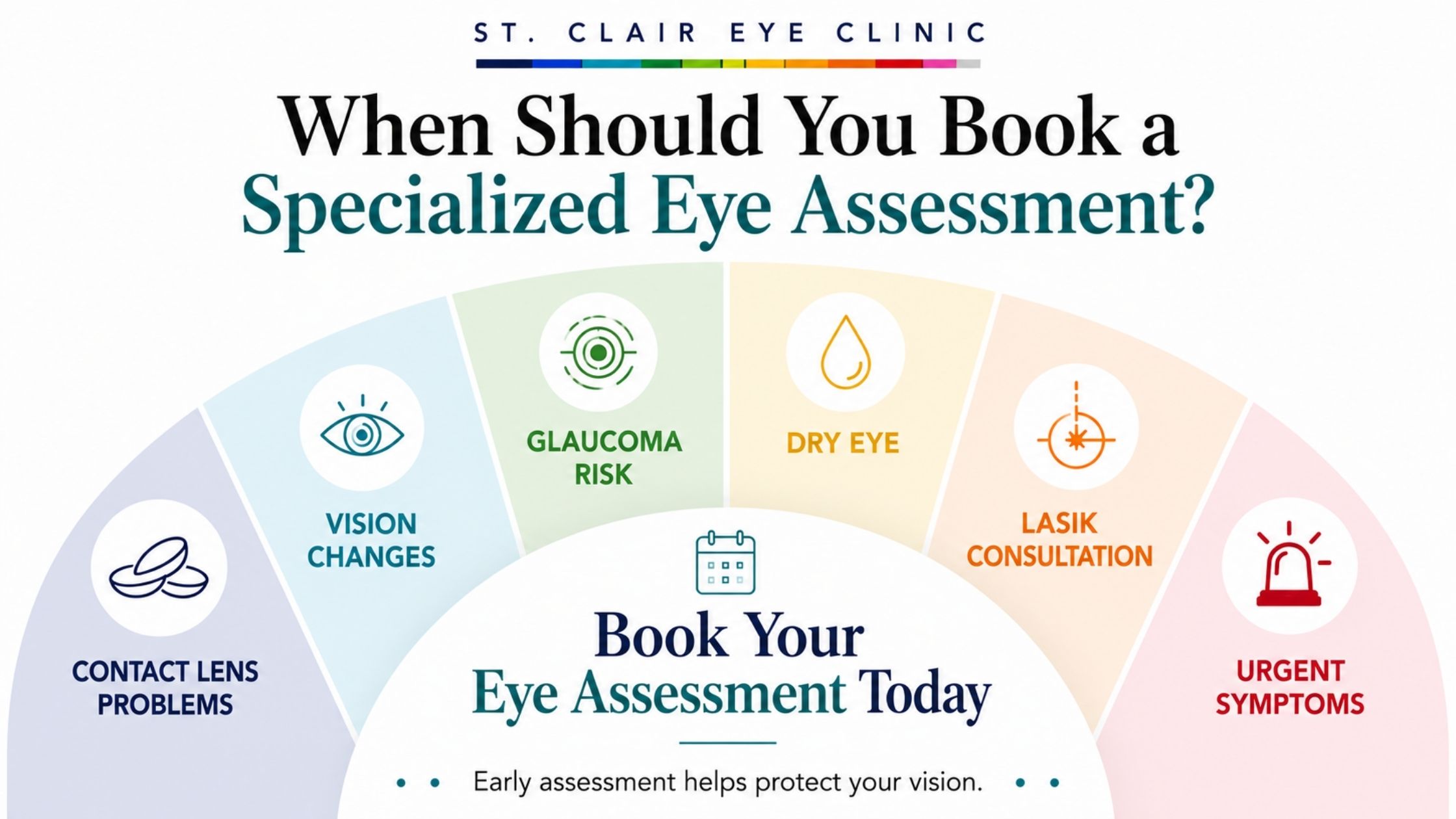
- Book a proactive assessment if you have glaucoma risk factors, need ongoing disease monitoring, are considering laser eye surgery, or have repeatedly struggled with contact lenses.
If you can’t tell which category your concern falls into, call the clinic. A short conversation about your symptoms can help determine how urgently you should be examined.
Give Small Changes the Attention They Deserve
Today’s assessment can provide valuable baseline measurements even if no immediate problem is found. Those records make subtle future changes easier to recognize and give you a clearer picture of your eye health over time. If your symptoms, risk factors, or vision changes fall outside of routine care, reach out to our team at St. Clair to book a specialized eye assessment.
Frequently Asked Questions About Special Eye Care
What vision changes may indicate an eye disease?
Persistent blurred vision, distorted lines, faded colours, missing areas of vision, poor night vision, or difficulty recognizing faces may indicate an eye health problem. These changes can involve the retina, macula, cornea, lens, or optic nerve. A specialized eye assessment can identify the affected structure and determine whether treatment, monitoring, or referral is needed.
Can you have glaucoma without noticing symptoms?
Yes. Common forms of glaucoma can gradually damage the optic nerve without causing noticeable early symptoms. Eye pressure measurement alone cannot confirm or rule out the condition. A glaucoma assessment may include optic nerve imaging, visual field testing, corneal measurements, and regular comparisons to detect changes before significant vision loss becomes apparent.
When should you seek specialized treatment for dry eye?
Consider specialized dry eye treatment when burning, grittiness, redness, watering, light sensitivity, or fluctuating vision keeps returning or interferes with daily activities. You should also book an assessment if lubricating drops provide limited relief. Testing can determine whether tear production, tear evaporation, inflammation, eyelid problems, or meibomian gland dysfunction is contributing.
What happens during a laser eye surgery consultation?
A laser eye surgery consultation evaluates your prescription stability, corneal shape and health, tear film, overall eye health, medical history, and visual goals. Your optometrist will discuss candidacy, realistic outcomes, possible limitations, and whether an existing concern should be treated first. The consultation helps you make an informed decision before meeting with or proceeding through a surgical provider.
Which eye symptoms require emergency care?
Sudden vision loss, severe eye pain, chemical exposure, significant trauma, new double vision, or a curtain-like shadow require emergency care. New flashes accompanied by a sudden increase in floaters also need urgent assessment. St. Clair Eye Clinic provides same-day and next-day emergency eye care in Toronto for sudden symptoms, infections, injuries, and other urgent concerns.
How do you know if your contact lenses need to be refitted?
Your contact lenses may need to be refitted if they cause recurring discomfort, redness, headaches, unstable vision, or increasing intolerance later in the day. A fitting evaluates lens curvature, diameter, material, movement, prescription, and tear film. Remove your lenses and seek prompt care if you develop pain, pronounced redness, discharge, light sensitivity, or sudden blurred vision.