

Key Takeaways:
- Toronto’s fall weather and indoor heating can create drier conditions that speed up tear evaporation and aggravate dry eye.
- Dry eye can cause watering, burning, grittiness, light sensitivity, and fluctuating vision. Your eyes don’t have to feel dry to have dry eye disease.
- Allergies and dry eye can produce overlapping symptoms. An assessment helps identify the cause so you receive appropriate treatment.
- Dry eye testing evaluates tear production, tear stability, and eyelid oil gland function to guide your care.
- Humidifiers, screen breaks, protection from wind, and avoiding direct airflow can help reduce everyday irritation.
- Air travel can worsen dryness. Keep eye-care supplies accessible, consider wearing glasses during flights, and maintain your treatment routine while away.
- Severe eye pain or sudden vision loss needs urgent assessment. Don’t assume these symptoms are simply another dry eye flare-up.
As the weather cools, the air shifts in a way most people don’t notice until their eyes start to sting. Fall in Toronto means changing humidity, early heating, and the slow onset of indoor dryness that leaves eyes feeling tired, gritty, or constantly irritated.
At St. Clair Eye Clinic, we see this every year. Patients come in convinced they’ve developed allergies or infections when it’s really seasonal dry eye brought on by the city’s unpredictable climate and screen-heavy lifestyles.
Dry eye isn’t a niche problem. It’s one of the most common reasons people visit a local optometrist, and if ignored, it can lead to lasting discomfort or blurred vision.
Let’s unpack what’s happening to your eyes this fall and what you can actually do to fix it.
What Makes Toronto’s Fall Air So Tough on Your Eyes
Fall feels like relief after a humid summer, but your eyes might not agree. Cooler air holds less moisture. As the temperature drops, indoor heating systems start running, pulling humidity out of every room you spend time in.
The result is a constant cycle of dry, recycled air both indoors and out. That lack of moisture evaporates the tear film, the thin layer of fluid protecting the surface of your eyes. When it breaks down, irritation, redness, and blurred vision follow.
Living in a large city like Toronto adds more triggers:
- Pollution and airborne particles irritate the eye’s surface.
- Long hours on screens reduce your blink rate.
- Contact lenses dry faster in low humidity.
Our team at St. Clair Eye Clinic sees more dry eye flare-ups between October and December than at any other time of year.
The Real Signs of Dry Eye
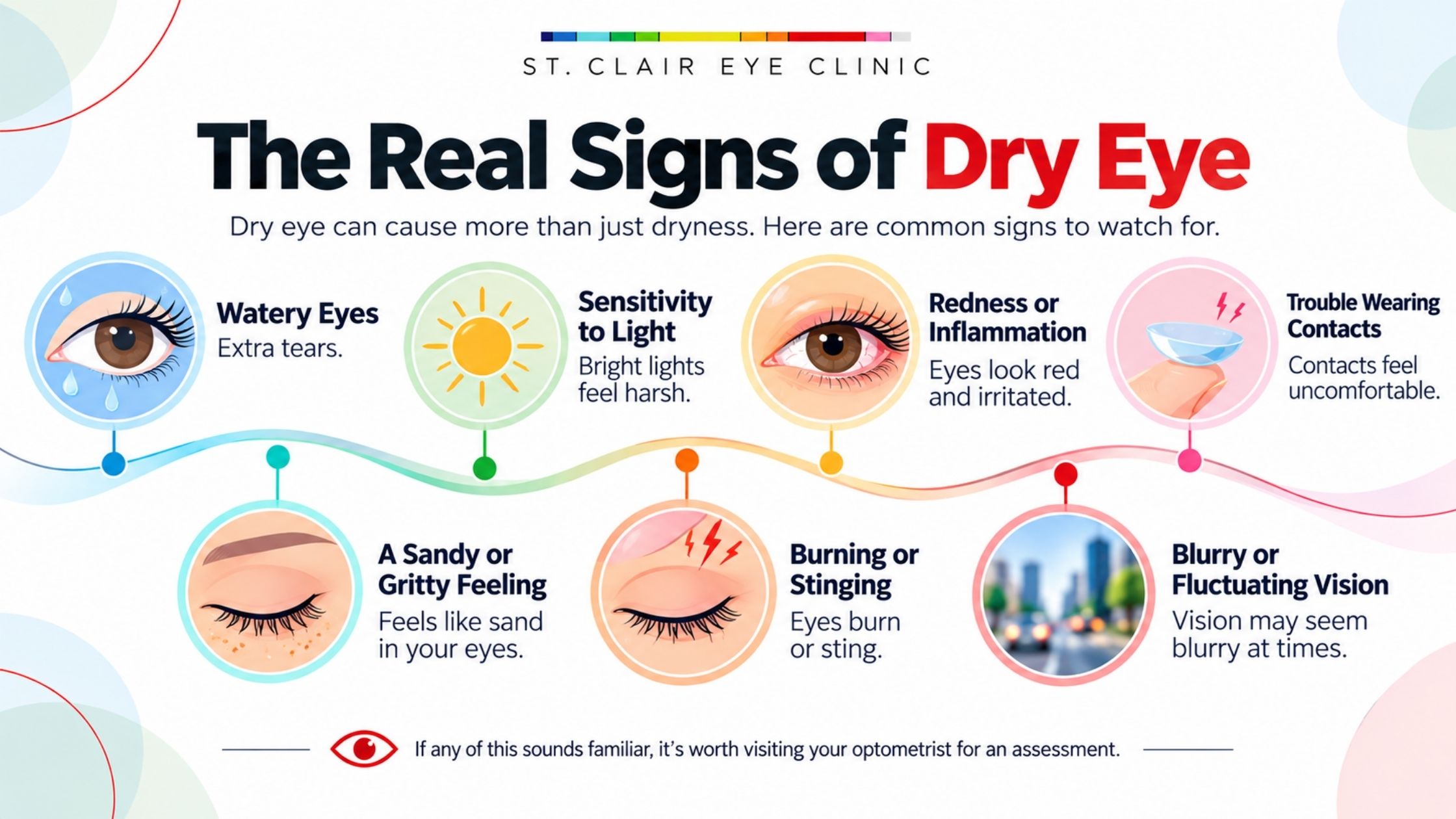
Dry eye doesn’t always feel “dry.” Many people experience watery eyes, which can be confusing. That excess tearing happens because your eyes are overcompensating for irritation.
Other symptoms include:
- A sandy or gritty feeling
- Sensitivity to light
- Burning or stinging
- Redness or inflammation
- Blurry or fluctuating vision
- Trouble wearing contacts
If any of this sounds familiar, it’s worth visiting your optometrist for an assessment. Early treatment prevents symptoms from turning into chronic discomfort.
Why You Shouldn’t Self-Diagnose Eye Irritation
It’s tempting to assume redness or discomfort means allergies, especially in fall. But the causes can overlap, and treatments differ.
Allergic conjunctivitis involves an immune reaction to pollen or dust, while dry eye results from poor tear quality or reduced tear production. Using over-the-counter allergy drops on dry eyes can make the issue worse, not better.
At our Toronto eye clinic, we test tear stability, oil gland function, and corneal health to pinpoint the real cause.
Everyday Habits That Make Dry Eye Worse
Dry eye isn’t always caused by one big trigger. Often, it’s death by a thousand small habits.
- Endless screen time
Every time you stare at a screen, your blink rate drops by up to 60%. That means less lubrication and faster evaporation of tears.
- Central heating and air conditioning
The same system that keeps you comfortable at home is drying your eyes out. Warm, forced air dehydrates the tear film.
- Not enough sleep
Poor sleep reduces the body’s ability to produce quality tears, especially in people already prone to eye strain.
- Makeup and skincare residue
Oils and products near the lash line can clog glands that keep your tears balanced.
If this sounds like your routine, you’re not alone. The fix starts with awareness and in some cases, professional guidance from a dry eye specialist in Toronto.
How a Toronto Optometrist Diagnoses Dry Eye
A professional diagnosis is simple, quick, and revealing. During an appointment, we look for three key factors:
- Tear production. Are your eyes making enough fluid to stay hydrated?
- Tear evaporation rate. Is the protective layer breaking down too fast?
- Gland function. Are the oil glands around your eyelids blocked or underproducing?
By combining these findings, we can identify whether your dry eye is caused by environmental factors, contact lenses, or an underlying condition.
The Best Treatments for Fall Dry Eye
There isn’t a one-size-fits-all solution. The treatment depends on your tear composition, environment, and daily habits. Common options include:
- Artificial tears that mimic natural lubrication
- Warm compresses to unblock oil glands
- Gentle eyelid hygiene to remove buildup
- Advanced in-office therapies for chronic cases
If your dryness suddenly worsens or is accompanied by severe pain or vision loss, it could be more than dryness. In that case, contact our emergency eye care team for same-day attention.
When Dry Eye Becomes an Emergency
Most cases are uncomfortable but not dangerous. However, untreated dryness can make your eyes more vulnerable to infection or corneal damage.
You should seek urgent care if you notice:
- Sharp pain
- Light flashes or new floaters
- Sudden vision loss
- Persistent redness that doesn’t improve
Having access to a trusted optometrist near you means you don’t have to guess whether it’s an emergency or not.
Managing Dry Eye at Home This Fall
Small lifestyle changes can dramatically reduce symptoms. Here’s what we recommend for our patients:
- Use a humidifier to keep moisture in the air.
- Take screen breaks with the 20-20-20 rule.
- Stay hydrated throughout the day.
- Wear sunglasses outdoors to protect against wind.
- Avoid sitting under direct heat or A/C vents.
These small adjustments support what we do in the clinic, keeping your eyes comfortable between visits.
Managing Dry Eyes During Air Travel
Flying out of Toronto for a holiday visit? Airplane cabins have very low humidity, which can leave your eyes uncomfortable before you reach your destination. Pack your usual lubricating drops in your carry-on, where you can reach them during the flight. If you wear contacts, check that your drops are approved for use with your lenses.
Consider wearing glasses on travel days, especially for longer flights. This gives your eyes a break from contacts and makes it easier to nap safely. Sleeping in lenses increases your risk of an eye infection, even during a short flight. Bring backup glasses and lens-care supplies so delays or lost luggage don’t leave you stuck wearing contacts longer than planned.
Once you arrive, keep up your prescribed treatment routine. A warmer destination doesn’t guarantee relief if you’re spending hours in air-conditioned hotels, while a heated guest room may feel drier than home. Pack enough supplies for the whole trip, plus a little extra for delays. If travel regularly triggers flare-ups, ask us before departure whether your usual dry eye plan needs adjusting.
Dry Eye in Kids and Older Adults
While dry eye is more common in adults, children and seniors can experience it too.
Our pediatric eye exams often reveal dryness in kids who spend long hours on tablets or gaming screens. Red eyes or frequent rubbing might not be allergies. It could be a sign of reduced blinking or dehydration.
For older adults, tear production naturally slows with age. Certain medications or health conditions can make symptoms worse, which is why our senior eye exams include detailed evaluations for dryness and ocular surface changes.

How St. Clair Eye Clinic Treats Dry Eye Differently
We take a customized approach to care, looking beyond symptoms to understand what’s happening in your lifestyle and environment.
Our optometrists design treatment plans that might include:
- Prescription drops for inflammation
- Specialized therapies for blocked glands
- Adjustments to contact lens use
- Nutrition guidance for better tear quality
Why Fall Is the Perfect Time for an Eye Exam
October and November are ideal months to book a preventive eye exam. Cooler weather often exposes eye issues that went unnoticed in summer, and taking care of them now means healthier eyes through winter.
Scheduling a visit with our Toronto optometrist team ensures that you’re not just reacting to dryness, but also preventing it.
See Clearly, Comfortably, and Confidently
Dry eyes aren’t something you should have to push through. They’re a sign your eyes need help maintaining balance in a changing environment.
If you’ve been blinking through irritation or waking up with red, tired eyes, it’s time for real care. The specialists at St. Clair Eye Clinic are here to help Toronto residents restore clarity and comfort, one visit at a time.
Frequently Asked Dry Eye Questions
What is the best climate for people with dry eyes?
A climate with moderate humidity, little wind, and low air pollution is generally more comfortable for people with dry eyes. Warm weather alone doesn’t guarantee relief, especially if you spend time in air-conditioned buildings. During Toronto’s fall and winter, managing indoor dryness and keeping direct airflow away from your face can help reduce symptoms.
What are the worst symptoms of dry eye?
Severe dry eye can cause persistent burning, pain, marked light sensitivity, and blurred vision that interferes with reading or driving. It can also damage the cornea, the clear surface at the front of your eye. Sudden vision loss, intense pain, or rapidly worsening redness requires urgent assessment because another eye condition may be responsible.
What is stage 4 dry eyes?
“Stage 4 dry eyes” usually refers to very severe dry eye, but the term isn’t a universal diagnosis. Some treatment frameworks use “step 4” for advanced care when earlier treatments haven’t provided enough relief. This may involve protective tissue grafts or surgery in selected cases. Your eye-care provider should explain which classification they’re using and what your examination shows.
How can I naturally lubricate my dry eyes?
You can support your natural tear film by blinking fully, taking screen breaks, and using a clean, comfortably warm compress to help eyelid oils flow. A humidifier and protection from wind can reduce moisture loss. These measures may improve comfort, but persistent dryness may still need lubricating drops or treatment for inflammation or blocked oil glands.
What vitamin are you lacking if you have dry eyes?
Vitamin A deficiency can cause dry eyes, but having dry eye symptoms doesn’t automatically mean you lack a vitamin. Tear evaporation, eyelid gland problems, medications, and other health conditions can also contribute. If a deficiency is suspected, your healthcare provider can assess your diet and health history. Avoid taking high-dose vitamin A without guidance because excessive amounts can be harmful.
Can dry eyes go back to normal?
Yes, temporary dryness may resolve when a trigger, such as dry cabin air or an irritating environment, is removed. Chronic dry eye often needs ongoing care, although treatment can substantially improve comfort and vision. Feeling better doesn’t always mean the underlying problem has disappeared. At St. Clair Eye Clinic, we can assess whether you need short-term relief or a maintenance plan.