Blog Hero

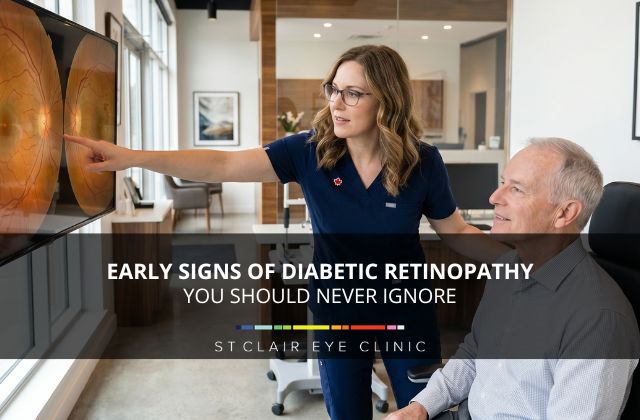
Early Signs of Diabetic Retinopathy You Should Never Ignore

Eye care professional showing retinal scan images to a senior patient during a diabetic retinopathy eye exam at an eye clinic.

Key Takeaways Diabetic retinopathy often develops silently, with subtle symptoms like fluctuating vision, glare sensitivity, floaters, or night vision difficulties appearing long before major vision loss occurs. Long-term diabetes, poor blood sugar control, high blood pressure, and elevated cholesterol significantly increase the risk of retinal damage and vision complications. Comprehensive dilated eye exams and advanced […]

Read More… from Early Signs of Diabetic Retinopathy You Should Never Ignore

How Diabetes Affects Your Eyes Over Time

Close-up retinal scan showing diabetic eye damage and blood vessel changes caused by diabetes over time.

Key Takeaways Diabetes can damage the eyes silently for years before noticeable vision changes occur, making regular diabetic eye exams critical for early detection and long-term vision protection. Diabetic retinopathy and diabetic macular edema are among the most serious complications of diabetes, affecting the retina and central vision through leaking or damaged blood vessels. Blood […]

Read More… from How Diabetes Affects Your Eyes Over Time

What Happens During a Diabetic Eye Exam? A Step-by-Step Guide

Eye doctor performing a diabetic eye exam using advanced retinal imaging equipment during a step-by-step diabetic eye screening appointment.

Key Takeaways Diabetic eye exams are designed to detect silent eye damage caused by diabetes before noticeable vision loss occurs. These exams go beyond a standard vision check, using advanced testing to evaluate blood vessels, the retina, and the optic nerve. Diabetes increases the risk of serious eye conditions like diabetic retinopathy, glaucoma, macular edema, […]

Read More… from What Happens During a Diabetic Eye Exam? A Step-by-Step Guide

Why Senior Eye Exams Are Essential for Preventing Irreversible Vision Loss

Senior woman struggling to read a product label in a grocery store, highlighting the importance of senior eye exams for preventing irreversible vision loss.

Key Takeaways Many serious eye diseases in older adults, including glaucoma and diabetic retinopathy, can develop without noticeable symptoms until permanent damage has already occurred. Comprehensive senior eye exams do far more than update prescriptions. They help detect retinal disease, optic nerve damage, vascular changes, and neurological concerns early. Age-related conditions such as glaucoma, cataracts, […]

Read More… from Why Senior Eye Exams Are Essential for Preventing Irreversible Vision Loss

How Often Should Seniors Get Eye Exams?

Senior woman wearing glasses at home reading medication labels, representing how often seniors should get comprehensive eye exams

Key Takeaways Seniors over 65 should typically receive a comprehensive eye exam every year, even if their vision seems stable. Many serious eye diseases, including glaucoma and macular degeneration, can progress without noticeable symptoms in the early stages. Comprehensive eye exams can reveal signs of broader health conditions such as diabetes, hypertension, and high cholesterol. […]

Read More… from How Often Should Seniors Get Eye Exams?

Early Signs of Eye Disease in Seniors That Are Easy to Miss

Senior woman reading in an eye clinic waiting room highlighting early signs of eye disease in seniors that are easy to miss.

Key Takeaways Many serious eye diseases in seniors develop silently, often without pain or noticeable symptoms in the early stages. Age-related macular degeneration (AMD), glaucoma, cataracts, and diabetic retinopathy are among the leading causes of vision loss in older adults. Persistent blurry vision, wavy lines, glare sensitivity, halos around lights, and reduced peripheral vision should […]

Read More… from Early Signs of Eye Disease in Seniors That Are Easy to Miss

Dry Eyes in Fall? Here’s Why Toronto’s Air Is Wrecking Your Vision

A man rubbing his eyes while working on a laptop, illustrating dry eye symptoms caused by Toronto’s dry fall air — St. Clair Eye Clinic.

As the weather cools, the air shifts in a way most people don’t notice until their eyes start to sting. Fall in Toronto means changing humidity, early heating, and the slow onset of indoor dryness that leaves eyes feeling tired, gritty, or constantly irritated. At St. Clair Eye Clinic, we see this every year. Patients […]

Read More… from Dry Eyes in Fall? Here’s Why Toronto’s Air Is Wrecking Your Vision

instagram facebook facebook2 pinterest twitter google-plus google linkedin2 yelp youtube phone location calendar share2 link star-full star star-half chevron-right chevron-left chevron-down chevron-up envelope fax