


Key Takeaways
- Flashes are streaks or flickers produced when the retina is stimulated without an external light source. Floaters are shadows cast on the retina by material within the eye’s vitreous gel. Blurred vision is a loss of visual sharpness that can have many causes, including changes affecting the retina or vitreous.
- Occasional, longstanding floaters are common, particularly with age. A sudden shower of new floaters or repeated flashes in one eye requires prompt assessment because it may signal a retinal tear.
- A curtain, shadow, or dark area spreading across your vision, sudden vision loss, or intense eye pain warrants emergency care. Retinal detachment can progress without causing physical pain. These are urgent warning signs.
- Nearsightedness, diabetes, high blood pressure, previous cataract surgery, eye trauma, and a history of retinal problems can increase the likelihood that new visual symptoms have a more serious cause.
- A dilated eye exam allows your optometrist to inspect the peripheral retina, where tears often develop. OCT, retinal photography, ultrasound, and visual field testing may provide additional information when needed.
- Most age-related floaters do not require treatment and become less noticeable over time. Retinal tears may be sealed with laser or freezing treatment, while a detached retina generally requires surgery.
One moment your vision is normal, the next, you’re seeing a shower of specks or a strange flicker at the edge of your sight. It’s unsettling, not knowing whether it’s harmless or urgent, and the worry can at times be worse than the symptom itself. If you’ve been scrolling through your phone, googling what’s happening to your eyes, you’re not alone. You deserve clear answers and the relief of knowing that conditions or symptoms can be managed with consistent specialized eye care.
Why These Symptoms Occur in the First Place
Floaters, flashes, and sudden blurry vision usually trace back to changes inside the eye itself, most often involving the vitreous, the clear gel that fills the space between your lens and retina. As that gel ages and shrinks, it can pull away from the retina in a normal process that accounts for the vast majority of floater complaints. By age 70, nearly everyone has gone through some version of this shift, and understanding the cause matters, as it can help you decide what to do if you experience these symptoms.
Age-Related Changes
Somewhere after age 50, most people undergo what’s called a posterior vitreous detachment, or PVD. The vitreous separates from the retinal surface and drifts slightly, and small clumps of collagen fibres cast shadows on the retina that we perceive as floaters. It’s a natural part of aging, similar to how skin loses elasticity over time. This can unfold gradually over several months, or it can happen more abruptly over a matter of days, and it tends to happen earlier in nearsighted people.
Underlying Health Conditions
Certain health conditions raise the odds of more serious symptoms. Diabetes can lead to diabetic retinopathy, where fragile blood vessels leak into the vitreous and produce floaters or blurred vision, with risk climbing the longer blood sugar has been poorly controlled. High blood pressure and high myopia both increase the risk of retinal tears. Migraines, meanwhile, can cause flashes of light or zigzag patterns without any actual damage to the eye.
Trauma and Eye Surgery History
A blow to the head or eye, a recent cataract surgery, or a history of retinal issues all raise your baseline risk. Even trauma from years earlier can leave the retina more fragile in ways that surface later, so past incidents are worth mentioning at your next appointment. If any of these apply to you, new symptoms deserve a closer look rather than a wait-and-see approach.
What Floaters and Flashes Look Like
Knowing what these symptoms feel like in practice makes it much easier to describe them accurately to your optometrist, and to notice when something changes. Floaters and flashes often appear together, since both stem from the same vitreous-related mechanism, though their intensity and frequency vary widely from person to person.
Floaters: Specks, Strings, and Cobwebs
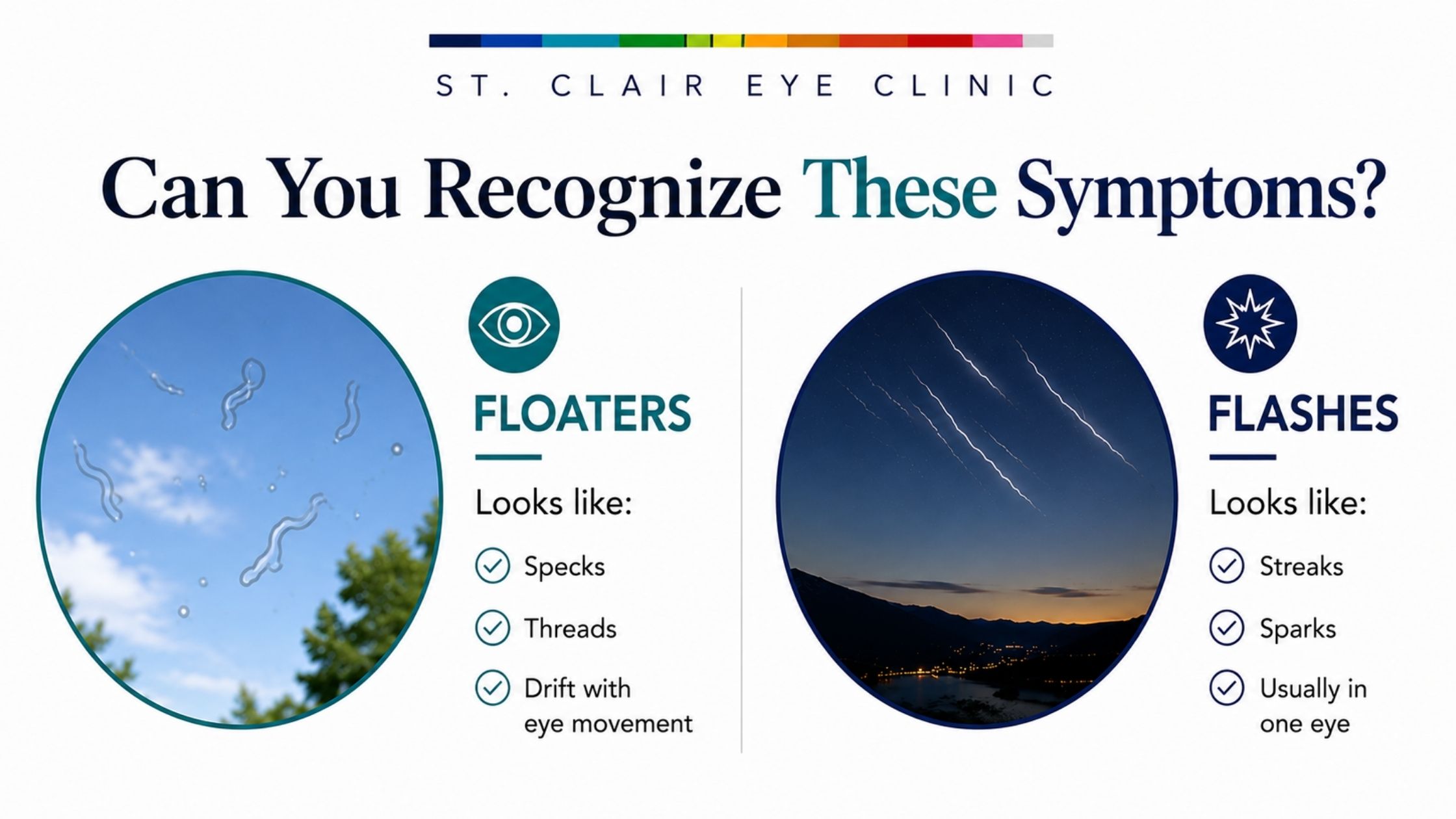
Floaters often appear as small dark spots, squiggly lines, or thread-like strands that drift across your field of vision. They tend to move when your eyes move and seem to dart away when you try to look directly at them. They’re usually most visible against bright, plain backgrounds like a clear sky or a white wall. Some people live with one large floater that never fades, while others notice dozens of tiny specks, and density can shift quickly during an active PVD.
Flashes: Light Without a Light Source
Flashes can look like brief streaks, sparks, or flickers of light, typically in your peripheral vision. They happen when the vitreous tugs on the retina, stimulating it in a way that mimics light even though none is actually present. Many people notice flashes more in dim rooms or at night, when there’s less competing visual input. Flashes tied to vitreous traction usually appear in one eye and recur in the same spot, unlike migraine-related flashes, which often affect both eyes and shift position.
Recognizing the Warning Signs
Occasional floaters or the rare flash are common and often nothing to worry about. But certain patterns signal that something more serious may be developing, and timing matters. The retina itself has no pain receptors, so real damage can be underway without any discomfort at all, which is exactly why visual patterns are so important to be cognizant of.
Sudden Changes Are the Biggest Red Flag
A sudden shower of new floaters, especially dozens appearing within hours or days, is different from the gradual, occasional floaters most people live with. The same goes for flashes that appear suddenly and repeatedly in one eye. Sudden onset is the detail that should prompt you to act quickly. If you can, note roughly how many new floaters appeared and over what timeframe, since that helps your optometrist gauge how fast things are progressing.
Symptoms That Warrant a Same-Day Call
A shadow or curtain spreading across part of your vision, a sudden drop in vision, or eye pain accompanied by visual disturbances can indicate a retinal tear or detachment. These are medical eye emergencies where every hour affects the odds of preserving your sight, so don’t wait for a routine appointment slot. Call our clinic directly and explain your symptoms so staff can work to get you seen right away. We are an emergency referral clinic for University Health Network (UHN) and provide same-day or next-day treatment. Go to your nearest hospital emergency room right away if you experience sudden vision loss, intense pain, flashes of light, or eye trauma after clinic hours.
How Eye Doctors Find the Cause of Flashes, Floaters and Blurred Vision
A proper evaluation goes beyond a basic vision check, and understanding what to expect can ease some of the anxiety around booking an appointment. Most assessments for new floaters or flashes take under an hour and can easily be done as part of a regular comprehensive eye exam.
The Dilated Eye Exam
Pupil dilation allows your optometrist to see the entire retina, including the far peripheral edges where tears most often begin. This remains the standard first step for anyone reporting new floaters or flashes, and it’s typically quick and painless. For a closer look at the far periphery, your optometrist may use a technique called scleral depression, gently pressing on the eye’s outer surface to bring those edges into view.
Imaging and Specialized Testing
Optical coherence tomography, or OCT, produces detailed cross-sectional images of the retina to track subtle changes in the eye. Visual field testing may also be used to map out any areas of vision loss and track them over time. Fundus photography is often also deployed, capturing high-resolution images of the retina, optic disc, and macula at the back of the eye, creating a baseline image to compare against future visits.
What Happens After a Diagnosis
Treatment depends entirely on what’s causing your symptoms and how advanced it is. Your optometrist will also weigh your overall eye health and lifestyle to create the most effective treatment plan for you.
When Watching and Waiting Makes Sense
Most floaters caused by a standard PVD need no treatment at all. Your optometrist will simply monitor the situation over one or more follow-up visits to confirm nothing has progressed. Over time, these floaters typically settle lower in the vitreous, out of your direct line of sight. Between visits, some patients check their vision at home with a simple grid pattern, watching for new distortion or blank spots.
Procedures for More Serious Cases
Retinal tears are often treated with laser retinopexy or cryopexy (freezing), both of which seal the tear before it can progress. A full retinal detachment usually requires surgery, such as a vitrectomy or scleral buckle, to reattach the retina and restore its blood supply. Acting quickly after diagnosis significantly improves the odds of a good visual outcome. Recovery can involve maintaining a specific head position for several days and attending follow-up visits, and your care team will walk you through what to expect.
Adjusting Your Perspective
Even when floaters are confirmed to be harmless, they can still be genuinely distracting, but the brain is remarkably good at filtering out visual noise it learns to ignore. Most people find their floaters become far less noticeable within a few months.
Fixating on them and constantly checking tends to keep them front of mind, so redirecting your attention to a task can help. Small environmental tweaks help too, like avoiding long stretches of staring at plain, bright backgrounds where floaters tend to stand out the most.

Leaning on Your Care Team
Keep your scheduled follow-up appointments, even when symptoms subside. Ask questions to make sure you understand everything you’re told, and report any new changes right away. A good optometrist would rather take an extra phone call than miss a developing issue.
Most floaters eventually fade into the background of daily life simply because your brain stops flagging them as something new to notice. If your vision has been acting up lately, don’t leave it to guesswork. Book a comprehensive eye exam with St. Clair Eye Clinic, and let our care team give your eyes the attention they deserve.
Frequently Asked Questions About Flashes, Floaters, Blurry Vision, and Eye Symptoms
When should I worry about flashes and floaters?
Seek prompt eye care if flashes or floaters appear suddenly, increase substantially, or occur with blurred vision. A curtain, shadow, missing area of vision, or sudden vision loss requires emergency assessment. These symptoms may indicate a retinal tear or detachment, where early treatment can help protect your sight.
Can flashes and floaters be signs of a retinal detachment?
Yes. A retinal tear or detachment can cause sudden flashes, numerous new floaters, blurred vision, peripheral vision loss, or a curtain-like shadow. However, flashes and floaters can also result from normal age-related vitreous changes. A dilated eye exam is needed to distinguish between these causes.
Why am I seeing flashes of light in only one eye?
Flashes in one eye can occur when the vitreous gel pulls on or separates from the retina. New or repeated flashes require assessment to rule out a retinal tear. Migraine-related visual effects more often involve both eyes and may appear as moving zigzags, shimmering areas, or changing patterns.
What causes sudden blurred vision with floaters?
Sudden blurred vision with floaters may result from a posterior vitreous detachment, bleeding inside the eye, diabetic retinopathy, a retinal tear, or retinal detachment. Because several possible causes threaten vision, this combination should be evaluated promptly rather than monitored at home.
How does an eye doctor check flashes, floaters, and blurred vision?
Your optometrist will usually dilate your pupils to examine the retina, including its far peripheral edges. Depending on what can be seen, additional testing may include OCT imaging, retinal photography, ultrasound, or visual field testing. These tests help identify tears, bleeding, retinal changes, and areas of vision loss.
Do eye floaters go away without treatment?
Floaters may not disappear completely, but many become less noticeable as they settle within the vitreous and your brain learns to filter them out. Harmless floaters generally require monitoring rather than treatment. Any sudden increase or change still warrants a new examination, even if previous floaters were diagnosed as benign.