

Key Takeaways
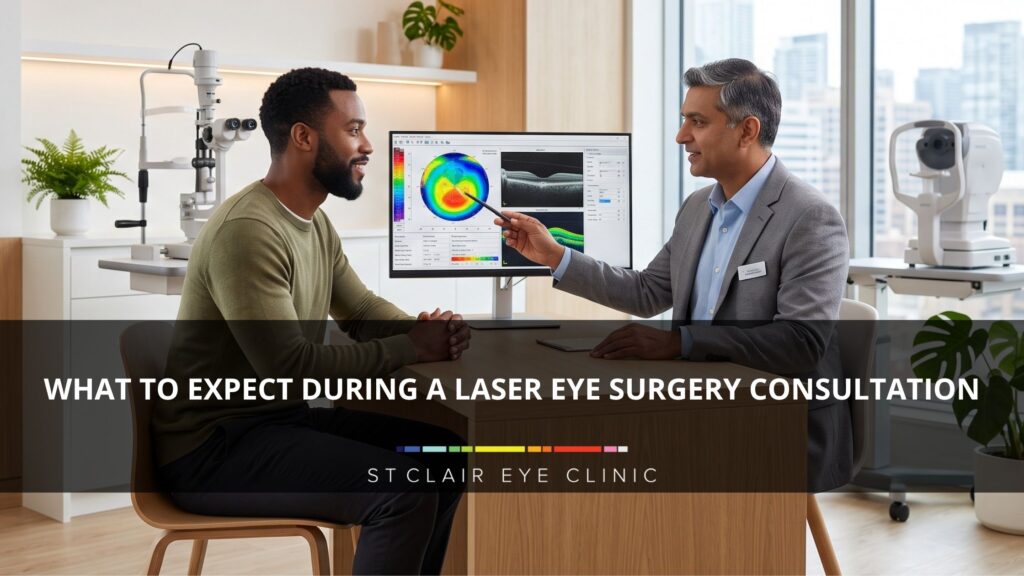
- A laser eye surgery consultation helps determine whether vision correction surgery is safe and appropriate for your eyes.
- Prescription stability is important because changing vision can affect the long-term predictability of surgical results.
- Corneal mapping and thickness measurements help determine whether LASIK, PRK, or another option may be suitable.
- Dry eye, corneal health, pupil size, eye pressure, and overall eye health all play a role in candidacy.
- A consultation should give you clear, personalized guidance, not pressure to commit to surgery.
Thinking about laser eye surgery can be exciting, but it can also bring up a lot of questions. While you may be tired of not being able to see properly without corrective eyewear, at the same time, surgery on your eyes isn’t something you want to rush into a decision about.
A laser eye surgery consultation gives you space to slow down, understand your options, and find out whether vision correction surgery is truly appropriate for your eyes. The goal is not to pressure you into a procedure, but to give you clear answers, careful testing, and professional guidance so you can make a decision you feel confident about.
Your Consultation Starts With a Conversation
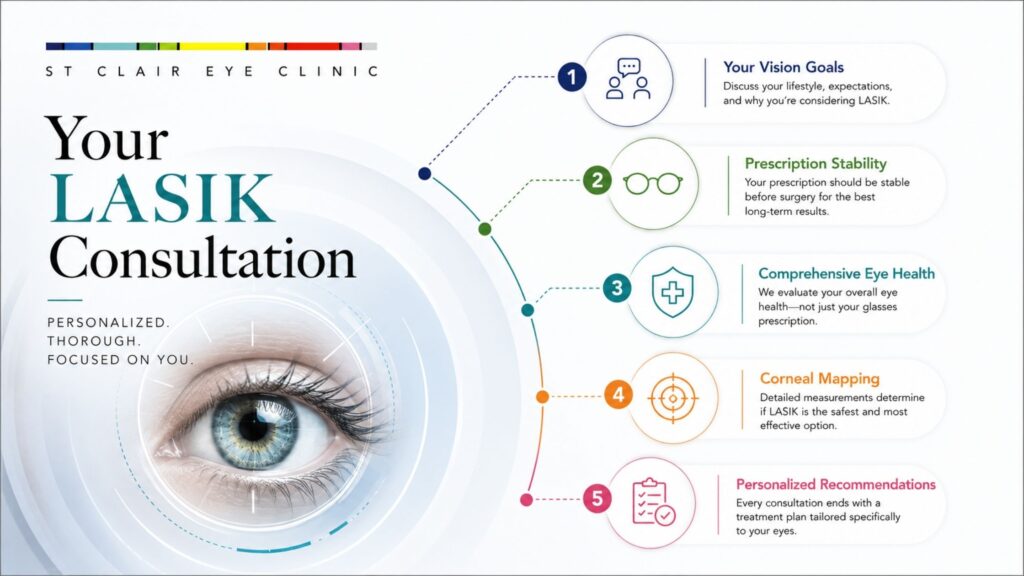
Before any testing begins, we want to understand why you’re considering laser eye surgery and what you hope life might look like afterward. Some patients want more freedom from glasses. Others struggle with contact lens discomfort, dry eyes, sports, travel, or work-related vision needs.
This conversation matters because laser eye surgery is highly personal. Two people may have the same prescription, but very different lifestyles, expectations, eye health histories, and comfort levels with surgery.
We may ask about:
- How long you’ve worn glasses or contact lenses
- Whether your prescription has changed recently
- How often you use screens
- Whether your eyes feel dry, irritated, gritty, or tired
- Your occupation, hobbies, and night driving needs
- Any previous eye injuries, infections, or surgeries
- Your general health and medications
This is also your opportunity to be honest about what worries you. If you’re nervous about discomfort, healing time, long-term results, or whether surgery is safe for your eyes, we would rather talk through those concerns early. A good consultation should leave you feeling more informed, not more overwhelmed.
We Review Your Prescription Stability
One of the first things we look at is whether your prescription has been stable. Laser eye surgery works by reshaping the cornea so light focuses more accurately on the retina. If your prescription is still changing, correcting today’s vision may not give you the long-term result you want.
That is why we review your current prescription and compare it with previous measurements when available. We want to know whether your nearsightedness, farsightedness, or astigmatism has remained consistent over time.
A small change does not automatically rule you out, but significant or frequent changes may mean it is better to wait. This is especially common for younger adults whose eyes are still settling, or for patients whose prescription has shifted because of health conditions, medications, pregnancy, dry eye, or early lens changes inside the eye.
This part of the consultation helps protect your outcome. The best time for surgery is not always the soonest time. It is the time when your eyes are stable enough to make the correction more predictable.
Your Eye Health Matters More Than Your Prescription Alone
Many people assume laser eye surgery candidacy is mostly about having the right prescription. Prescription is important, but eye health carries just as much weight.
During your consultation, we examine the health of the front and back of the eye. This may include checking the cornea, tear film, lens, retina, optic nerve, and overall eye pressure. We are looking for conditions that could affect surgical safety, healing, or the quality of your vision after surgery.
Certain eye conditions may need to be treated or monitored before surgery is considered. These can include dry eye disease, blepharitis, corneal scarring, keratoconus, cataracts, retinal concerns, glaucoma, or signs of inflammation.
This does not mean every diagnosis automatically rules out laser vision correction. Sometimes it simply changes the recommendation. For example, one patient may need dry eye treatment before being reassessed. Another may be better suited to a different type of refractive procedure. Someone else may be advised to avoid surgery because their eye health makes the risks too high.
Corneal Measurements Are a Major Part of the Visit
The cornea is the clear front surface of your eye, and it plays a central role in laser vision correction. Because the cornea is being reshaped during laser surgery, we need detailed measurements before anyone can recommend surgery responsibly.
Your consultation may include corneal mapping, also called topography or tomography, depending on the technology used. These tests create a detailed picture of the cornea’s shape, curvature, and thickness.
We’re looking for several things:
- Whether your cornea is thick enough for treatment
- Whether the corneal shape is regular and healthy
- Whether there are early signs of corneal weakness
- Whether astigmatism is stable and measurable
- Whether LASIK, PRK, or another option may be more appropriate
These tests are non-invasive. You simply look into an instrument while it captures measurements. There is no cutting, no discomfort, and no commitment to surgery.
The Impact of Dry Eyes on Laser Surgery Suitability
Dry eye is one of the most important topics during a laser eye surgery consultation. Many patients interested in surgery already experience dryness from contact lenses, long hours on screens, allergies, makeup use, medications, or meibomian gland dysfunction.
Laser eye surgery can temporarily worsen dryness during the healing process, especially in patients who already have an unstable tear film. That is why we evaluate your tear production, tear quality, eyelids, and ocular surface before making recommendations.
You may be asked whether your eyes burn, sting, water, feel gritty, fluctuate in clarity, or become uncomfortable later in the day. Some people are surprised to learn that watery eyes can also be a sign of dryness because the eye may overproduce reflex tears when the surface is irritated.
If dry eye is present, we may recommend treating it before moving forward. This can improve comfort, make measurements more reliable, and support better healing if surgery becomes appropriate later.
We Talk About Procedure Options
Not every patient is suited to the same type of laser vision correction. LASIK is the procedure many people know by name, but it is not the only option. PRK may be recommended for some patients, particularly when corneal thickness, lifestyle, occupation, or eye health factors make it more appropriate. Some patients may also be candidates for newer or alternative refractive procedures, depending on their eyes and the surgical centre involved.
During your consultation, we explain which options may fit your situation and why. We also discuss what laser eye surgery can and can’t do. It may reduce your dependence on glasses or contact lenses, but it does not stop natural age-related changes.
For example, many adults eventually develop presbyopia, which affects near vision and often creates the need for reading glasses. If you are in your 40s or beyond, this becomes an especially important part of the conversation.
You’ll Discuss Risks, Benefits, and Realistic Results
Laser eye surgery has helped many people enjoy clearer unaided vision, but it’s still a medical procedure. A proper consultation should include a balanced discussion of benefits, limitations, and risks.
We may discuss possible temporary effects such as dryness, light sensitivity, glare, halos, fluctuating vision, or discomfort during healing. We may also explain less common concerns, including undercorrection, overcorrection, infection, inflammation, or the need for enhancement.
We also talk about your expectations. If your goal is to reduce your dependence on glasses, that may be realistic. If your goal is to guarantee perfect vision forever, we need to have a more detailed conversation. Vision changes with age, and every eye heals differently.
Contact Lens Wear May Affect Your Measurements
If you wear contact lenses, we may ask you to stop wearing them before certain measurements or before a surgical assessment. Contact lenses can temporarily alter the shape of the cornea, especially if you wear rigid gas-permeable lenses, specialty lenses, or toric lenses.
Because laser eye surgery planning depends on precise corneal measurements, the eye needs time to return to its natural shape. The amount of time varies based on the type of lenses you wear and your individual eyes.
If this applies to you, we will guide you on what to do next and whether repeat measurements are needed.

You Can Ask Practical Questions About Surgery and Recovery
Your consultation is the right time to ask the questions that affect your real life. Many patients want to know how much time they need away from work, when they can drive, when they can exercise, whether they can wear makeup, how follow-up care works, and what symptoms are normal after surgery.
We encourage these questions to help you prepare properly.
Helpful questions to ask include:
- Which procedure appears safest for my eyes?
- Am I a strong candidate, a borderline candidate, or not a candidate?
- Do I have dry eye or another condition that should be treated first?
- What results are realistic for my prescription?
- What side effects should I expect during healing?
- What symptoms would require urgent attention?
- How will my care be shared between the surgical team and my optometrist?
- How often will I need follow-up visits?
No question is too basic. If something has been sitting in the back of your mind, bring it up.
Your Consultation May Lead to More Than One Possible Answer
At the end of your laser eye surgery consultation, there are a few possible outcomes.
You may be told that you appear to be a good candidate and can move forward with the next step. You may be told that you need treatment first, such as dry eye management, before surgery can be considered. You may need additional testing, repeated measurements, or a referral to a refractive surgeon for further assessment.
You may also learn that laser eye surgery is not recommended for your eyes. That can be disappointing, especially if you came in hoping for a simple yes. However, it is much better to know before surgery than to find out afterward through complications or an unsatisfying result.
Book Your Laser Eye Surgery Consultation in Midtown Toronto
Laser eye surgery can feel like a lifestyle decision, but it begins as an eye health decision. The clearer you are about your candidacy, risks, measurements, and expectations, the easier it becomes to choose your next step with confidence.
If you’re wondering whether laser eye surgery is right for you, book a consultation with our Midtown Toronto team at St. Clair Eye Clinic. We will take the time to assess your eyes carefully, answer your questions honestly, and help you make a decision that protects your vision over the long term.
Frequently Asked Questions About Laser Eye Surgery Consultations
What happens during a laser eye surgery consultation?
During a laser eye surgery consultation, your optometrist reviews your prescription, eye health, medical history, lifestyle needs, and vision goals. Testing may include corneal measurements, dry eye assessment, pupil evaluation, eye pressure checks, and a full eye health exam. The goal is to determine whether laser vision correction is safe and appropriate for your eyes.
How do I know if I am a good candidate for laser eye surgery?
You may be a good candidate for laser eye surgery if your prescription is stable, your corneas are healthy and thick enough, and you do not have eye conditions that could affect healing or vision quality. Dry eye, keratoconus, cataracts, glaucoma, autoimmune conditions, and certain medications may affect candidacy, so a full consultation is essential.
Why is dry eye checked before laser eye surgery?
Dry eye is checked before laser eye surgery because it can affect measurement accuracy, comfort, healing, and visual quality after the procedure. Laser vision correction can temporarily worsen dryness, especially when the tear film is already unstable. Treating dry eye before surgery can help improve comfort and support a better outcome.
What tests are done before LASIK or PRK?
Before LASIK or PRK, testing often includes prescription measurement, corneal mapping, corneal thickness measurement, dry eye evaluation, pupil size assessment, eye pressure testing, and a detailed eye health exam. These tests help identify whether your eyes can safely tolerate corneal reshaping and whether LASIK, PRK, or another option is more appropriate.
Can an optometrist tell me which laser eye surgery procedure is right for me?
An optometrist can assess your eye health, prescription, corneal measurements, dry eye status, and visual needs to help determine which laser eye surgery options may be appropriate. If you are a suitable candidate, we can guide you through the next steps and coordinate care with a refractive surgeon when needed.