

Key Takeaways
- Subtle vision changes, including blur, glare, headaches, and eye fatigue, can be early signs that your eyes need a professional exam.
- Digital eye strain can point to dry eye, focusing issues, an outdated prescription, or poor visual ergonomics, especially when symptoms continue after screen use.
- New floaters, flashes, shadows, sudden vision loss, or eye pain should be treated as urgent and assessed promptly.
- Night driving problems can reveal changes in prescription, dry eye, cataracts, or reduced contrast sensitivity before they affect daytime vision.
- Regular eye exams help detect eye disease early, protect long-term sight, and give you practical solutions for daily visual discomfort.
Your eyes usually give you clues before a problem becomes difficult to ignore. Sometimes those clues are obvious, like sudden blurry vision. Other times, they cause headaches, tired eyes, challenges driving at night, or irritation you keep blaming on long days. When something feels different, an eye exam can help you understand whether you need a new prescription, dry eye treatment, closer monitoring, or urgent care.
1. Your Vision Looks Blurry, Hazy, or Unstable
Blurred vision is one of the clearest signs that your eyes need attention, especially when it develops gradually or seems to come and go. You might notice that street signs look softer than they used to, small print takes more effort, or your vision clears after blinking but becomes cloudy again a few minutes later.
Sometimes the explanation is simple. Your prescription may have changed, or your eyes may be dry from screen use, indoor heating, contact lenses, or seasonal allergies. In other cases, blurry or hazy vision can point to cataracts, corneal changes, diabetes-related eye disease, glaucoma, or retinal concerns.
The pattern matters. Blurry near vision may suggest age-related focusing changes, while blurry distance vision may mean nearsightedness, astigmatism, or another refractive change. Vision that fluctuates throughout the day can also be connected to dry eye or blood sugar changes.
You shouldn’t wait until your vision feels “bad enough” to book an exam. If you’re squinting, moving objects closer or farther away, increasing your font size, or avoiding certain tasks because your vision feels unreliable, it’s time to have your eyes checked.
2. You Are Getting More Headaches Around the Eyes
Headaches are easy to blame on stress, sleep, posture, or a long workday. Those can absolutely play a role. But when you keep experiencing headaches around your forehead, temples, brow area, or behind the eyes, your visual system may be part of the problem.
Your eyes and brain work together all day to focus, track, shift attention, and keep images clear. If your prescription is outdated, your eyes may be working harder than they should. Small focusing problems can become more noticeable when you read, drive, use a computer, or move between near and far tasks. Even a mild uncorrected prescription can create enough strain to trigger discomfort by the afternoon.
Headaches can also be related to binocular vision issues, where both eyes do not work together comfortably. You may not see double, but you might feel tired, heavy-eyed, or unable to concentrate for long stretches. Children can experience this too, often without knowing how to explain what feels wrong.
An eye exam can check more than whether you need glasses. We can assess focusing, eye alignment, eye pressure, ocular surface health, and the structures inside the eye. If headaches have become more frequent, more visual, or more closely tied to reading and screen use, an exam is a smart next step.
3. Digital Eye Strain Is Starting to Follow You Offline
Digital eye strain is incredibly common, but that does not mean you should ignore it. Screens demand sustained focus, and most people blink less when looking at a phone, tablet, or computer. Over time, that can leave your eyes feeling dry, gritty, tired, watery, red, or heavy.
You may notice your vision blurring after a few hours at your desk, or you may find yourself rubbing your eyes, leaning closer to the screen, or taking longer to refocus when you look across the room. Some people also develop neck and shoulder tension because they are unconsciously adjusting their posture to see better.
The important question is whether your symptoms settle after rest. Mild screen-related fatigue often improves with breaks, better lighting, and a more comfortable workstation. But if your eyes still feel irritated after you step away, or if screen time is consistently triggering headaches, blurred vision, dryness, or focusing problems, an eye exam can help identify what’s driving the strain.
You may need an updated prescription, computer-specific lenses, dry eye treatment, contact lens adjustments, or practical changes to your visual setup.
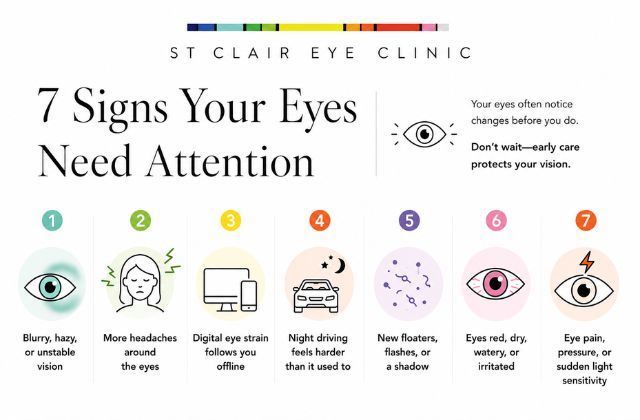
4. Night Driving Feels Harder Than It Used To
Night driving can reveal vision changes that are easier to miss during the day. You may feel less confident on dark roads, struggle with glare from headlights, notice halos around lights, or find it harder to judge distance and contrast.
A small prescription change can make a big difference at night because low-light conditions reduce contrast and make your pupils larger. That can expose issues like nearsightedness, astigmatism, early cataracts, or dry eye. If oncoming headlights feel unusually harsh, your eyes may be scattering light more than they should.
This is especially important if you have started avoiding night driving, slowing down more than usual, or feeling anxious in situations that used to feel routine. Your comfort behind the wheel is not simply about confidence. It depends on sharp distance vision, good peripheral awareness, healthy eye surfaces, and clear internal eye structures.
An eye exam can measure your prescription, check for cataracts, evaluate the front surface of your eyes, and screen for conditions that affect contrast and glare. Sometimes the solution is as simple as updated glasses with the right lens design. Other times, night driving changes are an early clue that your eye health needs closer monitoring.
5. You See New Floaters, Flashes, or a Shadow in Your Vision
Floaters can look like tiny specks, threads, cobwebs, or spots that drift across your vision. Many people develop floaters over time, especially with age, and some are harmless. The concern is when they are new, sudden, increasing, or paired with flashes of light.
Flashes can feel like brief sparks, lightning streaks, or flickers in the side of your vision. These symptoms can happen when the gel inside the eye pulls on the retina. In some cases, that pulling can lead to a retinal tear or retinal detachment, which needs prompt attention.
A shadow, curtain, or missing area in your vision is more urgent. So is a sudden shower of floaters, especially if it happens with flashes or reduced vision. These are not symptoms to monitor casually for several weeks.
If you notice sudden floaters, flashes, or a dark area in your vision, book urgent eye care. During the exam, we can dilate your pupils and examine the retina in-office at St. Clair Eye Clinic to look for tears, bleeding, detachment, inflammation, or other causes. Fast assessment matters because some retinal problems are much more treatable when they are caught early.
6. Your Eyes Are Red, Dry, Watery, or Irritated More Often
Eye irritation can be surprisingly disruptive. Dryness, burning, watering, redness, itchiness, foreign body sensation, and light sensitivity can make reading, working, driving, and wearing contact lenses uncomfortable.
The tricky part is that watery eyes can still be dry eyes. When the tear film is unstable, your eyes may produce reflex tears that run down your cheeks but don’t properly lubricate the surface. That can leave you stuck in a cycle of dryness, watering, and irritation.
Persistent redness or irritation can come from dry eye disease, allergies, blepharitis, meibomian gland dysfunction, contact lens overwear, infection, inflammation, or environmental triggers. Over-the-counter drops may help temporarily, but they do not always address the underlying cause. Some redness-relieving drops can also make symptoms rebound if used too often.
An eye exam allows us to look closely at the eyelids, tear film, cornea, conjunctiva, and oil glands. That matters because dry eye and irritation are not one-size-fits-all problems. The right treatment may involve lubricating drops, lid care, prescription medication, in-office therapy, allergy treatment, or changes to your contact lens routine.
If your eyes feel uncomfortable most days, you deserve more than temporary relief.
7. You Have Eye Pain, Pressure, or Sudden Light Sensitivity
Eye pain should always be taken seriously, especially when it’s new, one-sided, intense, or associated with vision changes. Pain can come from many causes, including corneal scratches, infection, inflammation, dry eye, foreign material, contact lens complications, eye pressure changes, or problems inside the eye.
Pressure around the eyes can sometimes be related to sinus issues or headaches, but it can also overlap with eye conditions that need proper evaluation. Sudden light sensitivity is another symptom worth checking, particularly if it comes with redness, pain, blurred vision, discharge, or a recent injury.
Contact lens wearers should be especially cautious. Pain, redness, and light sensitivity while wearing contacts can signal a corneal problem that needs prompt care. Removing the lenses may help temporarily, but it does not replace an exam.
Don’t try to self-diagnose eye pain based on how severe it feels. Some serious eye conditions create dramatic symptoms, while others begin more quietly. If your eye hurts, feels pressured, reacts strongly to light, or simply feels wrong in a way you can’t explain, book an exam. If symptoms are sudden or severe, same-day urgent eye care is the safer choice.

When Should You Book an Eye Exam?
A good rule is simple: if a visual symptom is new, persistent, worsening, or interfering with your daily life, it deserves professional attention. Eye exams are not only for updating glasses. They help detect eye disease, monitor changes, assess how your eyes work together, and uncover problems that may not be obvious in a mirror.
Some symptoms should be treated as urgent, including sudden vision loss, flashes and new floaters, a curtain or shadow in your vision, eye injury, severe eye pain, sudden double vision, or redness with significant light sensitivity. In those situations, contact our eye clinic promptly or seek emergency eye care.
For less urgent concerns, booking an exam early can still save you a lot of frustration. Blurry vision, headaches, eye strain, dry eyes, night driving difficulty, and recurring irritation often have practical solutions once the cause is properly identified.
Your eyes are always working in the background, helping you read faces, navigate streets, work, drive, and enjoy the details of your life. When they start asking for attention, listening early is one of the best ways to protect your comfort, eye health, and long-term vision.
If something feels different with your vision, book an eye exam with St. Clair Eye Clinic. We can help you understand what is happening and what your eyes need next.
FAQs
What are the early signs that you need an eye exam?
Early signs you need an eye exam include blurry vision, frequent headaches, digital eye strain, trouble seeing at night, red or irritated eyes, new floaters or flashes, and eye pain or pressure. If a symptom is new, persistent, or affecting your daily routine, book an eye exam instead of waiting for it to get worse.
Can digital eye strain mean I need glasses?
Yes, digital eye strain can mean you need glasses, an updated prescription, or computer-specific lenses. It can also be caused by dry eye, reduced blinking, screen glare, poor lighting, or focusing strain. If your eyes feel tired, dry, blurry, or sore after screen use, an eye exam can identify the cause.
When should I worry about floaters or flashes?
You should worry about floaters or flashes if they appear suddenly, increase quickly, or come with a shadow, curtain, or loss of vision. These symptoms can sometimes signal a retinal tear or detachment. Contact an eye clinic promptly or seek urgent care if you notice sudden floaters, flashes, or vision changes.
Why is night driving harder when my eyes are changing?
Night driving often becomes harder when your prescription changes, your eyes are dry, or early cataracts affect glare and contrast. Low-light conditions make small vision problems more noticeable. If headlights seem brighter, road signs look blurry, or you feel less confident driving after dark, book an eye exam.
Where can I book an eye exam in Midtown Toronto?
You can book an eye exam with St. Clair Eye Clinic in Midtown Toronto if you are noticing blurry vision, headaches, digital eye strain, dry eyes, night driving difficulty, or other vision changes. We provide comprehensive eye exams to assess your prescription, eye health, comfort, and risk of eye disease.