


Key Takeaways:
- Eye inflammation is the eye’s immune response to an infection, injury, irritant, or underlying disease.
- Conjunctivitis and blepharitis are usually mild, while uveitis, keratitis, and scleritis can affect your vision if they aren’t treated quickly.
- Autoimmune conditions such as ankylosing spondylitis and rheumatoid arthritis increase the risk of inflammation inside the eye.
- A red eye that comes with pain, sensitivity to light, or blurry vision should be checked the same day.
Most red eyes are caused by something minor, like allergies, a long day at the computer, or a mild infection. But when redness comes with pain, sensitivity to light, or blurry vision, it can be a sign of inflammation that needs to be treated quickly to protect your vision.
Eye inflammation is the eye’s immune response to an infection, injury, irritant, or underlying disease, and it can cause redness, swelling, pain, or changes in your vision. At St. Clair Eye Clinic, our eye disease diagnosis and management services cover everything from irritated eyelids to inflammation inside the eye.
Types of Eye Inflammation
Eye inflammation is named after the part of the eye that’s affected. Having an idea which part is involved helps your optometrist judge how urgent the problem is and which treatment will work best.
Conjunctivitis, Blepharitis, and Keratitis
Conjunctivitis, often called pink eye, is inflammation of the thin, clear layer that covers the white of the eye and the inside of the eyelids. It’s usually caused by a virus, bacteria, or allergies, and it’s one of the most common eye problems people experience.
Blepharitis affects the edges of the eyelids. It happens when the oil glands along the eyelash line become blocked, leaving your eyelids red, crusty, or itchy.
Keratitis is inflammation of the cornea, the clear front surface of the eye. It’s usually more painful than conjunctivitis and can blur your vision, and people who wear contact lenses have a higher risk of developing it.
Uveitis, Iritis, and Scleritis
Uveitis is inflammation of the uvea, the middle layer of the eye that supplies blood to the iris and retina. The most common type is iritis, which affects the coloured part of the eye, and it accounts for 50 to 70% of uveitis cases in Western countries.
Scleritis affects the sclera, the tough white outer wall of the eye. It causes a deep, intense ache that often gets worse when you move your eye.
What Causes Eye Inflammation?
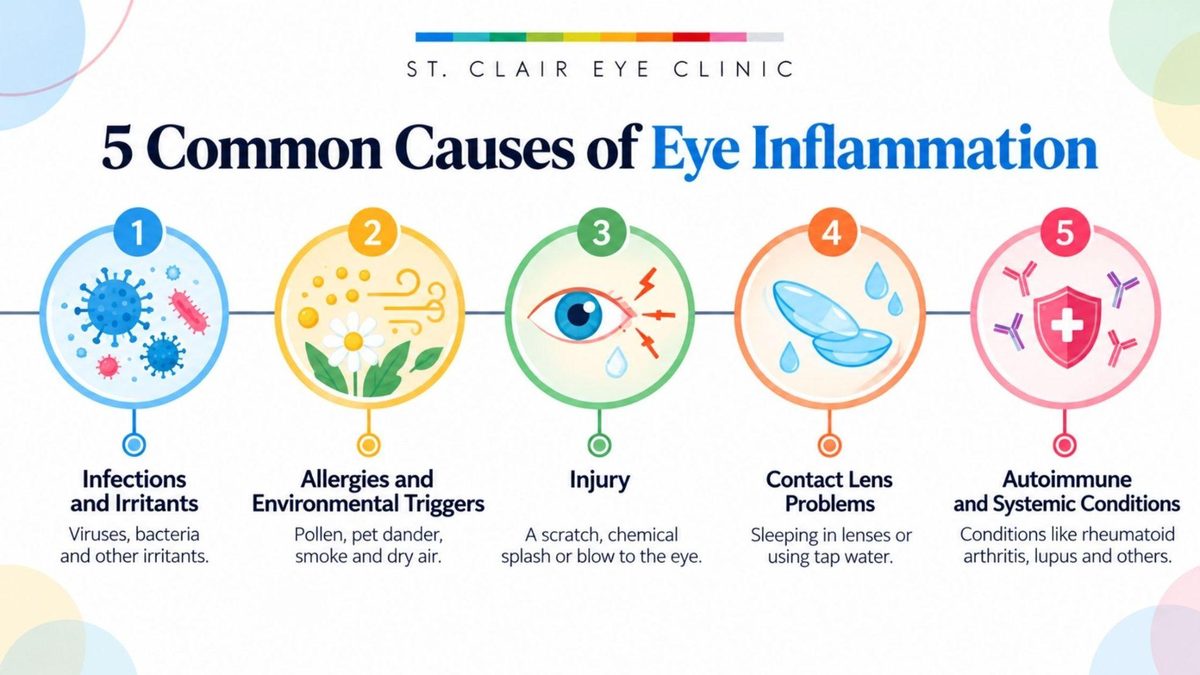
Most cases come down to an infection, an allergy or irritant, an injury, or a problem with the immune system.
Infections and Irritants
Viruses and bacteria cause most cases of infectious conjunctivitis and keratitis. The virus that causes shingles can also inflame the cornea or the inside of the eye, sometimes years after the original infection.
Allergies to pollen, pet dander, or smoke are common causes of red, itchy eyes. Chronic dry eye can also cause ongoing inflammation on the surface of the eye, which is why dry eye treatment often focuses on reducing inflammation and restoring moisture.
Injury and Contact Lens Problems
A scratch, a chemical splash, or a blow to the eye can all trigger inflammation. Sleeping with contact lenses on or rinsing them with tap water also raises the risk of a corneal infection.
Autoimmune and Systemic Risk Factors
Some types of eye inflammation are caused by conditions that affect the whole body. When the immune system mistakenly attacks healthy tissue, the eyes can also be impacted, sometimes before the condition is diagnosed. Conditions linked to uveitis and scleritis include:
- Ankylosing spondylitis, a type of inflammatory arthritis that affects the spine and is one of the most common causes of repeat iritis.
- Rheumatoid arthritis, which is the condition most often linked to scleritis.
- Inflammatory bowel disease, sarcoidosis, lupus, and juvenile idiopathic arthritis, which can cause inflammation in the front or back of the eye.
A clear cause isn’t always found, though, as no specific cause is identified in about half of uveitis cases. If you have an autoimmune condition, let your optometrist know, since it affects how quickly a red or painful eye should be checked.
Symptoms of Eye Inflammation
The most common symptoms are redness, pain, watering, itching, sensitivity to light, and blurry vision.
| Type | Typical Symptoms | How Soon it Should Be Checked |
|---|---|---|
| Conjunctivitis or blepharitis | The eye or eyelid looks pink, itches or feels gritty, and may have discharge. | Book an exam if it hasn’t improved in two days. |
| Keratitis | The eye hurts, waters a lot, and is sensitive to light. | Get same-day care, especially if you wear contacts. |
| Uveitis or iritis | The eye aches, bright light hurts, and your vision is blurry. | Get same-day care to protect your vision. |
| Scleritis | A deep ache can wake you up at night, and the white of the eye looks dark red. | Get same-day care and mention any autoimmune condition. |
When Should You Seek Treatment for Eye Inflammation?
If your eye is mildly irritated but your vision is clear and there’s no real pain, a regular appointment is usually fine. Come in within a day or two if the redness hasn’t improved after 48 hours or keeps coming back.
Get same-day or emergency care if:
- You have moderate or severe eye pain, especially pain that gets worse when you move your eye.
- Your vision suddenly becomes blurry, or you notice a sudden increase in floaters or flashes of light.
- Your eye is red and painful while you’re wearing contact lenses. Take them out and bring them to your appointment.
St. Clair Eye Clinic is a family care referral clinic for the University Health Network, and we offer same-day and next-day emergency eye care in Toronto. Outside of clinic hours, go to the nearest hospital emergency department for sudden vision loss, severe pain, or a chemical injury.

How Optometrists Diagnose Eye Inflammation
Your appointment will start with questions about your symptoms, contact lens use, and overall health, since a problem elsewhere in the body, like ongoing lower back stiffness, can be connected to eye inflammation.
Next, your optometrist will examine your eye with a slit lamp, a microscope with a bright, narrow beam of light. This shows whether there are inflammatory cells inside the front of the eye, which is how iritis is distinguished from surface conditions like pink eye.
Other tests may include a special dye to check the cornea for scratches or ulcers, an eye pressure check, and imaging of the retina at the back of the eye. If an autoimmune condition or infection is suspected, we can also coordinate blood work or a specialist referral with your family doctor.
Treatment Options for Eye Inflammation
Treatment depends on the cause, which is why it’s important not to self-diagnose and/or self-treat a painful red eye. Steroid drops, for example, reduce inflammation quickly, but they can make a herpes infection worse and raise eye pressure if they aren’t monitored. Depending on your diagnosis, treatment may include:
- Lubricating drops, warm compresses, and eyelid cleaning for dry eye and blepharitis.
- Antihistamine, antibiotic, or antiviral drops for allergies and infections.
- Steroid drops and drops that dilate the pupil for iritis, which ease pain and keep the iris from sticking to the lens.
- Oral medication, injections, or immune-suppressing drugs for severe uveitis or scleritis, usually managed together with an ophthalmologist or rheumatologist.
With the right treatment, most cases of iritis clear up within a few days to a few weeks. We also recommend avoiding redness-relief drops and old prescriptions, since they can hide your symptoms without treating the cause.
Complications of Eye Inflammation
When eye inflammation isn’t treated, or keeps coming back, it can lead to glaucoma, cataracts, scarring of the cornea, swelling at the centre of the retina, and permanent vision loss.
Uveitis is the third leading cause of irreversible blindness worldwide, and it mostly affects children and working-age adults. Repeat episodes should always be checked, even if each one clears up.
Protect Your Vision With St. Clair Eye Clinic
Most eye inflammation responds well to treatment when it’s addressed early. Since 1973, St. Clair Eye Clinic has provided eye care to families in Midtown Toronto, and our team uses the latest equipment to diagnose and treat your symptoms.
If your eye is red, sore, or sensitive to light, call (416) 654-6443 or book an appointment with our team.
Frequently Asked Questions About Eye Inflammation
What Is the Most Common Cause of Eye Inflammation?
The most common cause is conjunctivitis, usually from allergies or a virus. Allergic conjunctivitis tends to affect both eyes and causes itching, while viral conjunctivitis often starts in one eye, spreads to the other, and causes watery discharge. Uveitis and scleritis are less common, but they’re more painful and always need to be treated by an eye care professional.
Can Eye Inflammation Go Away on Its Own?
Mild cases sometimes go away on their own, but more serious types of inflammation usually don’t. Viral conjunctivitis often clears up within one to two weeks, and allergy symptoms usually improve once you avoid the trigger. Uveitis, scleritis, and keratitis rarely improve without treatment, and they can damage your vision in the meantime. If your eye is painful, sensitive to light, or blurry, it’s best to book an eye exam rather than wait.
What Autoimmune Diseases Cause Eye Inflammation?
The autoimmune conditions most often linked to eye inflammation include ankylosing spondylitis, rheumatoid arthritis, inflammatory bowel disease, sarcoidosis, lupus, and juvenile idiopathic arthritis. These conditions can lead to uveitis, scleritis, or severe dry eye. Sometimes eye inflammation is the first sign of a condition that hasn’t been diagnosed yet. If you have one of these conditions, have any red or painful eye checked promptly.
How Can You Tell the Difference Between Pink Eye and Uveitis?
Pink eye usually causes itching, a gritty feeling, and discharge, with redness across the white of the eye, and your vision generally stays clear. Uveitis is more likely to cause a deep ache, pain in bright light, and blurry vision, often with redness around the coloured part of the eye and little or no discharge. Because the two can look similar, an eye exam is the only way to know for sure.
Can Eye Inflammation Cause Permanent Vision Loss?
Yes, some types can, especially if they aren’t treated or keep coming back. Uveitis can lead to glaucoma, cataracts, and swelling in the retina; keratitis can scar the cornea, and scleritis can thin the outer wall of the eye. The good news is that early diagnosis and treatment protect vision in most cases, so it’s important to have a painful, light-sensitive, or blurry eye checked quickly.