

7 Key Takeaways:
- Regular eye exams can detect conditions such as glaucoma before symptoms appear and help your optometrist track changes over time.
- Blurry vision, difficulty focusing up close, and headaches during reading can signal a need to assess your prescription and how your eyes work together.
- Persistent burning or gritty eyes warrant an assessment. Reduced blinking during screen use and airflow toward your face can contribute to discomfort.
- Increasing glare and difficulty driving at night may indicate cataracts or another vision problem. Avoid driving whenever you cannot see safely.
- Sudden vision changes, new flashes or increased floaters, and significant eye pain require urgent assessment. A curtain or shadow across your vision needs immediate emergency care.
- Children may show vision difficulties by squinting, tilting their head, or closing one eye. Age-appropriate exams can identify problems before children can explain them.
- Diabetes, high blood pressure, autoimmune conditions, and a family history of eye disease can influence your eye care needs and examination schedule.
Nobody wants another appointment on their calendar without a good reason. But your vision is nothing to leave to risk. And when your eyes are making work uncomfortable, reading frustrating, or driving stressful, figuring out what’s wrong can bring real relief. It’s also a good idea to get your eyes checked regularly to stay ahead of these issues.
Why Regular Eye Exams are Important
It’s possible that someone can read the smallest print and still have an eye condition that needs monitoring. Regular eye exams create a record that helps your optometrist compare findings over time, crucial for flagging progressive eye disease. Glaucoma, for example, can develop without obvious early symptoms.
For adults without additional risk factors, the Canadian Association of Optometrists generally recommends examinations at least every two years from ages 20 to 64 and annually from age 65. Your optometrist may recommend a different interval based on your eye health and history. Mention relatives with glaucoma or other inherited eye conditions, since this can influence your follow-up schedule.
Aside from these regular check-ups on your eye health, here are 10 of the most common signs that you should get your eyes checked out:
1. Your Everyday Vision Has Become Blurry
Street signs look fuzzy, subtitles are harder to follow, or familiar faces take longer to recognize. These changes deserve attention, even if you can still manage your usual activities.
An outdated prescription is one possibility, but blur can also come from the eye’s surface, lens, or retina. During the exam, tell us whether the blur affects distance, close work, or both. Also mention whether it stays constant or comes and goes.
Sudden blurred vision or vision loss needs immediate assessment, particularly when it affects one eye. Contact an eye care professional urgently instead of waiting for a routine appointment.
2. You’re Holding Your Phone Farther Away
If your arms suddenly seem too short for reading, you may be experiencing presbyopia. This age-related change usually becomes noticeable in your 40s, when the eye’s natural lens becomes less flexible and has more difficulty focusing up close. It can happen even if you’ve always had excellent distance vision.
Brighter lighting or larger text may help temporarily, but your reading difficulties deserve a closer look.
Bring examples of the distances you work at. A book, desktop monitor, and sheet of music may each sit at a different distance from your eyes. That information helps us recommend a correction suited to your day, including situations where basic reading glasses may feel awkward.
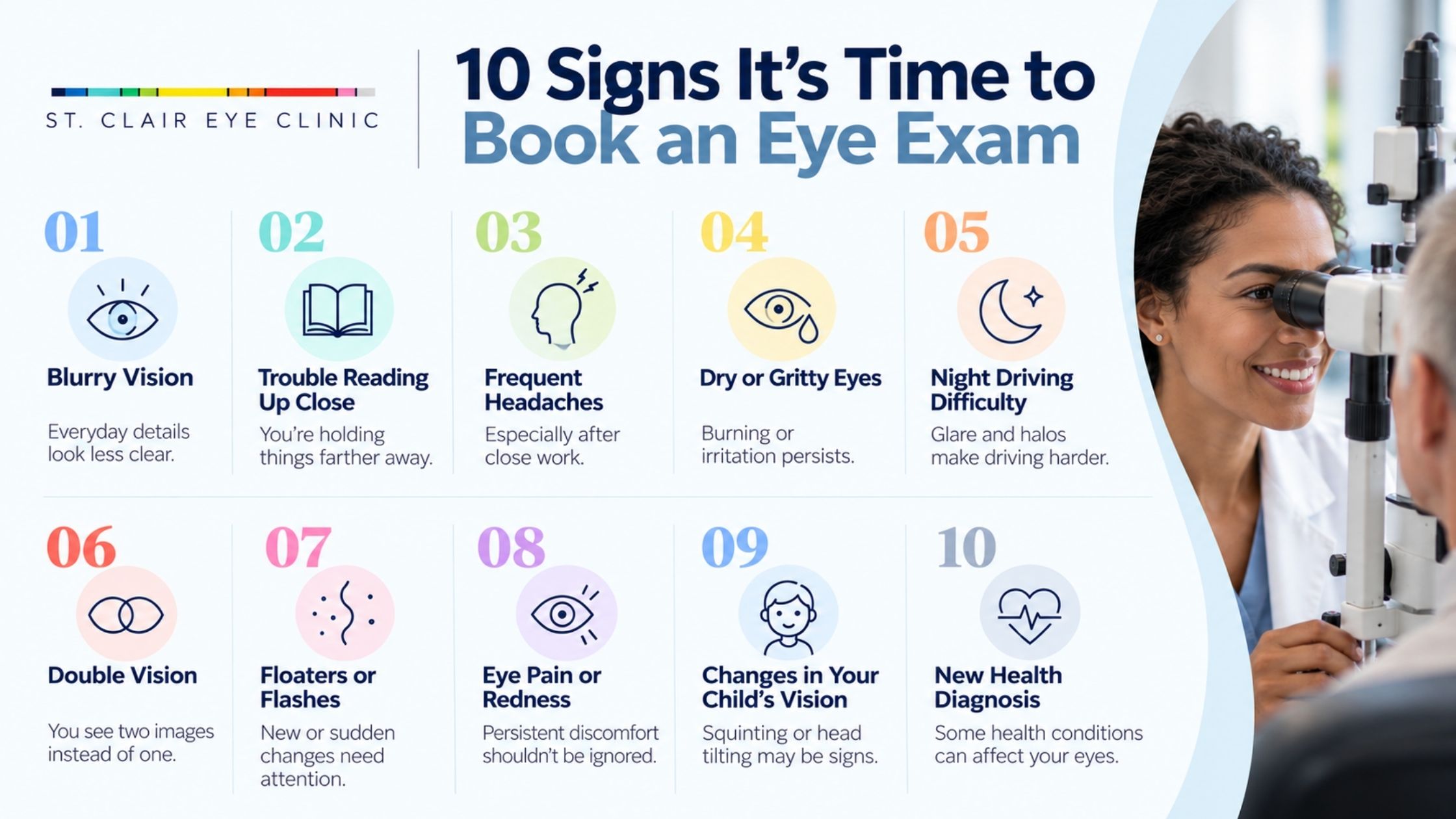
3. Headaches Follow Reading or Computer Work
A headache that repeatedly appears during close work can be a clue that your visual system is struggling with the task. An uncorrected prescription or difficulty focusing and coordinating your eyes may contribute.
An eye exam can investigate these possibilities, although headaches have many causes and may also need assessment by your family doctor. Screen-related headaches are among the recognized symptoms of digital eye strain.
Before your appointment, take notice of when the discomfort starts. Does it happen after twenty minutes of reading, only at your workstation, or on days away from screens too?
A brief symptom record gives us more useful information than simply saying your eyes feel tired. Include whether your current glasses help and how long the headaches last.
4. Your Eyes Regularly Burn or Feel Gritty
That sandy feeling can make every blink distracting. Dry eye may develop when you produce too few tears or when your tears evaporate too quickly. An examination can assess tear stability and eyelid function to help identify what’s contributing.
Your routine matters. People tend to blink less during concentrated screen use, which can leave the eye’s surface less comfortably lubricated. Regular breaks, deliberate full blinks, and reducing screen reflections may help. Persistent symptoms, however, need an assessment.
Tell us about your workspace, including fans or heating vents blowing toward your face. Bring the names of any drops you use, too. We need to know if you need them repeatedly just to get through the afternoon.
5. Night Driving Has Become More Difficult
Oncoming headlights may seem unusually dazzling, or you might struggle to make out pedestrians and road markings after sunset. Perhaps you’ve started arranging outings so you can get home before dark.
These are meaningful changes that warrant an eye exam. Cataracts can scatter light and cause glare, halos, and difficulty seeing at night, although other vision problems can produce similar complaints.
Describe the situation that troubles you most, such as rain, poorly lit roads, or approaching headlights. That helps us understand how your vision affects your safety and independence.
Avoid driving when you can’t see safely. Arrange another way to travel while the cause is being assessed.
6. You’re Seeing Two Images of One Object
Double vision might look like two clearly separated images or a second image overlapping the first. Even if it happens only occasionally, it needs assessment.
One useful detail is whether the doubling remains when you cover either eye in turn. Double vision that occurs with both eyes open can involve eye alignment, while doubling that remains in one uncovered eye may have a different cause. Share what you notice without trying to diagnose it yourself.
New, sudden double vision requires urgent eye care. If it follows a head injury or occurs with a severe headache, seek emergency care immediately. Call 911 if you also have stroke symptoms such as weakness or difficulty speaking. Don’t drive yourself.
7. New Floaters or Flashes Appear
Floaters can resemble drifting threads, dots, or cobwebs. A few longstanding floaters may be harmless, but a sudden increase or new flashes of light needs urgent attention.
Changes in the gel inside your eye can sometimes pull on the retina, the light-sensitive tissue lining the back of the eye. An examination is needed to check for a retinal tear or detachment. You cannot reliably distinguish a harmless change from a dangerous one by appearance alone.
Seek same-day eye care for new flashes or a sudden increase in floaters. A curtain, shadow, or missing area of vision requires immediate emergency assessment.
When calling, describe these symptoms clearly so the appointment can be prioritized appropriately.
8. You Have Eye Pain or Persistent Redness
Redness that keeps returning, discharge, or ongoing discomfort after repeated attempts to address them with eye drops requires an eye exam.
Several conditions can produce a red eye, and the treatment depends on the cause. Significant pain, light sensitivity, or a change in vision raises the urgency. A severely painful red eye, especially with headache or nausea, needs immediate medical attention.
Contact lens wearers should be particularly careful. Remove your lenses and seek urgent assessment if an eye becomes red or painful because an infection may be involved. Wear glasses until you’ve been advised that it’s safe to resume lens use. Don’t test whether a fresh pair feels better.
9. Your Child Changes How They Read or Play
Children don’t always say their vision is blurry. You might notice your child closing one eye, tilting their head, squinting, or avoiding activities they previously enjoyed.
These behaviours can have several explanations, but vision is worth investigating. Children may assume everyone sees the way they do, so waiting for a complaint can miss a problem. A kids’ eye exam can assess how clearly each eye sees and whether the eyes work together comfortably.
10. You’ve Had a New Health Diagnosis
High blood pressure can affect eye health, while autoimmune conditions such as Sjögren syndrome may contribute to dry eye. After a diagnosis, ask about the impact on eye health and schedule an eye exam if necessary. Bring an updated medication list and mention new diagnoses when booking so we can plan the appropriate assessment.
A diabetes diagnosis especially requires an eye exam, even if your vision seems unchanged. Diabetes can damage retinal blood vessels before noticeable symptoms develop, and changes in blood sugar can also affect vision.
Let us know when you were diagnosed and what your medical team has recommended. Your eye care schedule should reflect your diabetes type, existing eye findings, and individual circumstances.
Finding Eye Care That Fits Your Needs
Choose an optometrist who explains findings clearly and welcomes questions. Ask how the practice handles follow-up care, urgent symptoms, and referrals when specialist treatment is needed.
You don’t have to prove that an eye concern is serious before bringing it up. “Something feels different” is a perfectly useful starting point. Book your eye exam with our St. Clair Eye Clinic team, and bring the questions you’ve been putting off. Getting a clear explanation can help protect your vision in the years to come.
Frequently Asked Eye Test Questions
What are the first signs of bad eyesight?
Early signs of vision problems can include blurry distance or near vision, frequent squinting, holding reading material farther away, and headaches after close work. You may also find night driving more difficult. These symptoms don’t identify the cause on their own. A comprehensive eye exam can determine whether you need a prescription change or further investigation.
What are some red flags for eye problems?
Eye health red flags include sudden blurred or lost vision, new double vision, flashes of light, a sudden increase in floaters, and a painful red eye. Seek urgent assessment for these symptoms. A curtain or shadow across your vision requires immediate emergency care. Call 911 if vision changes occur with weakness or difficulty speaking.
How do I know if I should book an eye test?
Book an eye exam if your vision changes, your eyes remain uncomfortable, or visual tasks become harder. You should also book when your recommended check-up is due, even without symptoms, and discuss new health diagnoses with your optometrist. Our St. Clair Eye Clinic team in Toronto can help determine the appropriate appointment and timing.
What not to do before an eye test?
Don’t stop prescribed medications or eye drops unless your clinician instructs you to. Don’t assume you must remove contact lenses for a fixed period beforehand; ask your clinic, since instructions depend on the examination. Avoid arriving without your current glasses and medication list. If dilation is planned, arrange transportation rather than relying on driving yourself home.