

Key Takeaways
- LASIK recovery is often faster than patients expect, with many people noticing clearer vision within the first 24 to 48 hours, but the eyes still need more time to fully heal.
- Vision can fluctuate during recovery, especially when the eyes are dry, tired, or strained from screens, reading, driving, or dry indoor air.
- Dryness, glare, halos, light sensitivity, and mild discomfort are common after LASIK, particularly in the first few days and weeks.
- Your candidacy assessment affects your recovery outlook because corneal thickness, prescription stability, tear quality, and overall eye health all influence how safely and predictably the eyes can heal.
- Following post-operative instructions closely helps reduce the risk of irritation, infection, inflammation, and flap-related complications during early healing.
- Most patients need to avoid eye rubbing, swimming, hot tubs, eye makeup, dusty environments, and strenuous exercise until their surgeon confirms it is safe.
- Follow-up appointments are important even when vision seems clear because your eye doctor can check healing, corneal stability, tear film quality, and early signs of complications.
Relatively speaking, LASIK recovery can be surprisingly fast, but “fast” doesn’t mean overnight. Many people notice clearer vision within a day or two, while dryness, glare, fluctuating focus, and night vision changes can take longer to improve. Healing is personal, as your recovery depends on your prescription, corneal health, tear film, lifestyle, and how closely you follow post-operative instructions.
LASIK Candidacy & Considerations
During a laser eye surgery consultation, your eye doctor evaluates whether your eyes are healthy enough for the procedure and whether your expectations match what LASIK can realistically achieve. During laser eye surgery, a thin corneal flap is created, the underlying corneal tissue is reshaped with a laser to correct your prescription, and the flap is repositioned so the surface can begin healing. That means your cornea must be thick, stable, and healthy enough to tolerate reshaping without increasing the risk of complications.
Prescription stability also matters because LASIK corrects the vision you have at the time of surgery. If your prescription is still changing, your results may be less predictable. Corneal mapping helps detect irregularities such as keratoconus risk, while tear film testing helps identify dry eye concerns that could slow comfort and visual recovery. LASIK can temporarily reduce tear production and make existing dryness worse. If you already deal with burning, grittiness, fluctuating vision, or contact lens intolerance, those symptoms should be discussed before any surgical decision is made.
Your eye doctor also considers pupil size, age, lifestyle, medications, and eye health history to determine whether LASIK is appropriate or whether another vision correction option may be safer.
Long-Term Vision & Eye Health Go Hand-in-Hand
Most people who are good LASIK candidates are pleased with their visual outcome, but recovery should be understood as a process rather than a single finish line. Vision may be functional very quickly, then continue to sharpen and stabilize over weeks to months. Dryness and night vision symptoms often improve gradually as the corneal nerves and tear film recover.
While LASIK changes the shape of the cornea to reduce dependence on glasses or contact lenses, it doesn’t stop the natural aging of the eye. You may still need reading glasses later because of presbyopia, and you still need routine eye exams to monitor eye pressure, retinal health, cataracts, dry eye, and other conditions.
In short, long-term success also depends on good, consistent eye care practices.
LASIK Recovery Timeline and Stages
Most LASIK recovery happens in stages. Your surgeon will give you instructions specific to your eyes, but the general timeline often looks like this:
The first few hours. Your eyes may burn, water, sting, or feel gritty, almost like there is an eyelash or contact lens in the eye. Light sensitivity and blurry vision are common. You will need someone to drive you home, and your main job is to rest with your eyes closed as much as possible.
The first 24 to 48 hours. Many patients notice a significant improvement in vision by the next day, although it may come and go. You might be able to return to desk work or light daily activities, depending on your surgeon’s advice and how comfortable your eyes feel, but it’s generally recommended to minimize or completely avoid:
- Prolonged computer use, screen time
- Reading
- Strenuous activity, heavy lifting
- Being in dusty, smoky, or hazardous environments
Also, under no circumstances should you rub your eyes, as this can damage the corneal flap.
Your first post-operative appointment will likely take place during this time and is especially important because the doctor checks the corneal flap, the healing response, and early signs of irritation or inflammation, conducts a vision test and a driving suitability assessment, and removes any temporary shields or bandage lenses.
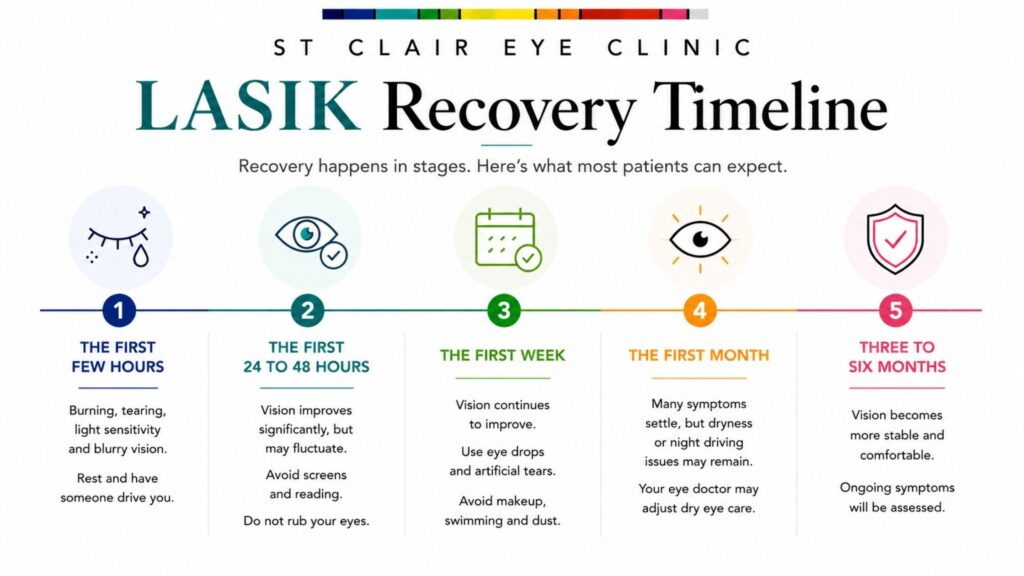
The first week. Vision often continues to improve, but dryness, glare, halos, and mild fluctuations can still happen. You’ll likely continue medicated drops and preservative-free artificial tears. Makeup, swimming, hot tubs, dusty environments, and eye rubbing are usually still restricted during this stage because the eye’s surface is healing.
The first month. Many day-to-day symptoms settle, but some patients still notice dryness or night driving difficulty. This is also when your eye doctor may adjust your dry eye management plan if your tear film is affecting vision quality.
Three to six months. For many people, vision becomes more stable and comfortable during this period. If dryness, halos, glare, or fluctuating focus persist, your eye doctor can assess whether dry eye treatment, other, additional treatment, more time, or further surgical review is needed.
Symptoms and Side Effects During Recovery
Temporary symptoms are common after LASIK, especially in the early recovery period. Blurry or hazy vision, watering, burning, scratchiness, and light sensitivity are expected during the first day or two. These symptoms often improve quickly, but they can feel intense at first because the cornea is one of the most sensitive tissues in the body.
Dry eye is one of the most common LASIK-related side effects. Your vision may seem clear one moment and slightly smeared the next, especially after screen use, reading, driving, or spending time in dry indoor air. This happens because the tear film is part of the eye’s focusing system. When the surface dries out, vision quality can fluctuate even if the surgical correction itself was successful.
Night vision changes can also occur. Some patients notice glare, halos around lights, starbursts, or reduced contrast when driving after dark. These symptoms are often more noticeable in the first few weeks, particularly if the eyes are dry or the pupils enlarge in dim lighting.
Mild redness can happen, especially from small surface blood spots caused by the suction used during surgery. These usually look more alarming than they feel and fade on their own.
Pain that worsens, sudden vision loss, heavy discharge, significant swelling, or severe light sensitivity is different. Those symptoms should be treated as warning signs that might require emergency eye care, not normal recovery discomfort.
Post-Operative Care and Self-Care Guidelines
It’s important to treat your surgeon’s post-operative instructions as part of the procedure. The early healing period depends on protecting the corneal flap, controlling inflammation, preventing infection, and keeping the ocular surface lubricated.
Use your prescribed drops exactly as directed. Antibiotic and anti-inflammatory drops are typically used for a short period after surgery, while artificial tears may be needed more often and for longer. Don’t stop medicated drops early because your eyes feel fine, and do not add redness-relief drops unless your eye doctor approves them.

Again, avoid rubbing your eyes at all costs. Many surgeons recommend wearing protective shields while sleeping during the first few nights so you do not accidentally touch your eyes.
Give your eyes breaks from screens, especially during the first week. Screen use reduces blink rate, which can make dryness worse. Follow the 20-20-20 rule (every 20 minutes, take a 20-second break to look at an object at least 20 feet away), use lubricating drops as recommended, and make a conscious effort to blink fully.
Keep water, sweat, smoke, dust, and cosmetics away from your eyes until your surgeon clears you. Swimming pools, hot tubs, lakes, saunas, and eye makeup can increase irritation or infection risk during early healing.
When to Seek Medical Advice
Some fluctuation is normal, but symptoms that worsen, feel one-sided, or interfere with daily life deserve professional attention.
Contact your surgeon or eye doctor promptly if you have increasing pain, sudden worsening of vision, severe redness, discharge, swelling, new floaters, flashes of light, a curtain-like shadow in your vision, or intense light sensitivity. These symptoms are not something to “wait out,” even if they happen outside a scheduled follow-up visit.
You should also seek advice if dryness feels unmanageable despite using artificial tears. Persistent burning, grittiness, watery eyes, fluctuating clarity, or contact lens-like discomfort can mean the tear film needs more support. Treatment may include different lubricating drops, prescription dry eye therapy, lid hygiene, warm compresses, punctal plugs, or other targeted care depending on the cause.
Night vision symptoms should also be discussed if they are affecting driving, work, or safety. Glare and halos can improve with time, but your doctor may want to check your refraction, pupil response, corneal healing, tear film quality, and signs of residual prescription.
Follow-up appointments matter even when you feel well. Some concerns are easier to identify through an exam than through symptoms alone. If something feels wrong, trust that instinct and reach out to us at St. Clair Eye Clinic. LASIK recovery is usually straightforward, but timely care is what keeps small issues from becoming larger problems.
In Conclusion
You can start seeing a lot more clearly relatively quickly after LASIK, but healthy healing still requires patience. The best recovery isn’t rushed, guessed at, or managed with internet advice alone. If you’re considering laser eye surgery or want an independent assessment of your eyes before moving forward, book a LASIK consultation with our friendly team at St. Clair.
Frequently Asked LASIK Recovery Questions
How long does it take to recover from LASIK surgery?
Many people see well enough for light daily activities within 24 to 48 hours after LASIK, but full recovery takes longer. Vision may fluctuate for several weeks, and dryness or night vision symptoms can take a few months to improve. For many patients, vision is more stable by three to six months.
Is blurry vision normal after LASIK?
Yes, blurry or fluctuating vision is common during LASIK recovery, especially in the first few days and weeks. Your vision may change throughout the day if your eyes are dry, tired, or irritated. If blurry vision suddenly gets worse or comes with pain, redness, or discharge, contact your eye doctor promptly.
How long do dry eyes last after LASIK?
Dry eyes can last for several weeks to a few months after LASIK because the corneal nerves and tear film need time to recover. Artificial tears, prescribed drops, and proper follow-up care can help manage symptoms. If dryness affects your comfort or vision, your eye doctor may recommend additional dry eye treatment.
When can I go back to work after LASIK?
Some patients return to desk work within a day or two after LASIK, depending on their surgeon’s advice and how their eyes feel. Screen-heavy work may be uncomfortable at first because reduced blinking can worsen dryness. Taking visual breaks, using lubricating drops, and avoiding eye rubbing can make the transition easier.
How soon after LASIK can I exercise or work out?
Many patients can resume light activity, such as walking, within a day or two after LASIK, but strenuous workouts usually need to wait until your surgeon clears you. Sweat, impact, dust, and accidental eye contact can irritate the eyes or interfere with early healing. Swimming, hot tubs, and contact sports typically require a longer break.
When should I call an eye doctor after LASIK?
Call your eye doctor if you experience worsening pain, sudden vision changes, severe redness, discharge, swelling, new flashes or floaters, or intense light sensitivity. Mild irritation and fluctuating vision can be part of normal healing, but symptoms that worsen or feel unusual should be checked rather than ignored.