

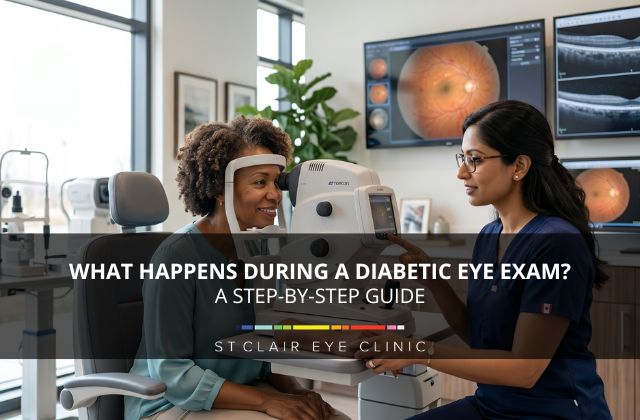
Key Takeaways
- Diabetic eye exams are designed to detect silent eye damage caused by diabetes before noticeable vision loss occurs.
- These exams go beyond a standard vision check, using advanced testing to evaluate blood vessels, the retina, and the optic nerve.
- Diabetes increases the risk of serious eye conditions like diabetic retinopathy, glaucoma, macular edema, and cataracts, often without early symptoms.
- Early detection dramatically improves treatment outcomes and can help slow, stabilize, or even prevent long-term vision loss.
- Regular diabetic eye exams are an essential part of overall diabetes management because they provide insight into both eye health and broader vascular health.
Most people think blurry vision is the first sign that something is wrong with their eyes. For diabetics, that is rarely true. By the time vision changes are noticeable, significant damage may already be done. Diabetes affects your eyes in ways that are invisible until they are not, and that window matters more than most people realize.
Purpose of a Diabetic Eye Exam
Aside from raising blood sugar, Diabetes raises pressure inside the delicate blood vessels lining the back of your eye. Over time, those vessels weaken, leak, or grow abnormally, threatening the retina before you feel a thing.
A diabetic eye exam exists specifically to catch that silent damage early. Unlike a standard vision check, it is a medical surveillance tool, one designed to detect the earliest signs of diabetic retinopathy, macular edema, glaucoma, and cataracts, all of which develop faster and more aggressively in people living with diabetes.
Key Tests and Procedures
At the start of a diabetic eye exam is a baseline visual acuity test, aka the standard eye chart test, with letters getting smaller on each line. Following this is a targeted sequence of assessments built around one goal: precisely mapping the health of your retina and optic nerve.
Eye Pressure
First, the pressure inside your eye is measured using tonometry, most commonly by a brief puff of air to your eye and measuring how much the cornea flattens in response. Diabetics are roughly twice as likely to develop glaucoma, a condition where too much internal pressure quietly damages the optic nerve. This makes it crucial to know the early signs of glaucoma as a diabetic.
A Look Inside the Eyes
Next, your pupils are dilated using eye drops, giving the doctor an unobstructed view of your retina, macula, and optic nerve. This is where early signs of diabetic eye disease actually become visible.
From there, a scan called OCT (optical coherence tomography) captures paper-thin cross-sections of your retinal tissue, revealing fluid buildup or structural changes too subtle to see otherwise. Retinal photography then creates a permanent image of the back of your eye, giving your care team a visual reference point to compare against at future visits.
Differences from Regular Eye Exams
A regular eye exam is mostly about your prescription and catching common issues like nearsightedness or dry eyes. A diabetic eye exam is a different appointment entirely, built for a different purpose. Your eye doctor is not just evaluating your vision; they are assessing your blood vessel health, the effectiveness of your diabetes management, and how your risk profile is shifting over time.
Preparing for a Diabetic Eye Exam & What to Expect
Walking into a diabetic eye exam prepared makes a genuine difference in what your doctor can learn from the visit.
Before your appointment, take note of any vision changes you have noticed, even ones that seem minor or came and went quickly. It’s important to note, however, that sudden vision changes may require emergency care. Bring a complete list of your current medications, including dosages, because certain drugs can affect eye pressure and retinal health in ways your doctor needs to account for.
Your most recent HbA1c result is worth bringing as well. This single number tells your eye doctor how well your blood sugar has been controlled over the past three months, which directly informs how aggressively they screen and how urgently they act on what they find. If your levels have been running high, your doctor will look harder and with greater concern.
On the day of your exam, plan for your pupils to be dilated. The drops take a few minutes to fully open your pupils, and once they do, your vision will be blurry and sensitive to light for several hours. Bring sunglasses, and if possible, arrange a ride in advance.
The exam itself is painless. You will sit at various instruments, follow some light prompts, and spend most of the appointment having different parts of your eye examined and imaged.
From check-in to walking out the door, expect to be there between 60 and 80 minutes, occasionally longer if additional imaging is needed.
Treatment and Management Options
Finding something during a diabetic eye exam is not a worst-case scenario. It is actually the best possible outcome of the appointment, because early detection is precisely what makes treatment effective.
If early-stage diabetic retinopathy is detected, the first line of action is often tightening control over the factors feeding it. Your eye doctor will work closely with your primary care physician or endocrinologist to address blood sugar levels, blood pressure, and cholesterol, all three of which directly accelerate retinal damage when left unchecked. In many early cases, bringing these numbers into a healthier range is enough to slow or even stabilize progression without any procedural intervention.
When the disease has progressed further, more targeted treatments come into play.
The throughline across all of your options is timing. The earlier a problem is caught, the more conservative and effective the treatment available to address it.
Aftercare and Follow-up
The appointment does not end when you walk out the door. What happens in the days and weeks after your diabetic eye exam is just as important as the exam itself.
Reviewing Your Results
If your doctor identifies any changes, you should receive a clear explanation of what was found, what it means, and what the next step looks like. This includes knowing whether you need a follow-up imaging session, a referral, or a change in your current care plan. If results are being sent to your primary care doctor or endocrinologist, confirm that handoff is happening and follow up with that provider directly.
Managing Post-Dilation Discomfort
Light sensitivity and blurred near vision after dilation can linger for two to three hours. Wearing sunglasses outdoors helps, and avoiding tasks that require sharp focus, like reading or screen time, makes the recovery more comfortable. These effects are temporary and resolve on their own.
Frequency and Timing of Exams
How often you need an eye exam is not a one-size-fits-all answer, and treating it like one is a mistake that costs people their vision.
Newly Diagnosed Patients
If you have just been diagnosed with Type 2 diabetes, you should schedule a comprehensive dilated eye exam as soon as possible. For Type 1 diabetics, the recommendation is to have your first exam within five years of diagnosis. The reasoning is straightforward: Type 2 diabetes is often present for years before it is caught, meaning eye damage may already be underway at the time of diagnosis.
Ongoing Scheduling Based on Risk
For most diabetics with no current signs of eye disease, an annual exam is the standard recommendation as part of an eye disease management plan. However, if retinopathy or other changes have been detected, your doctor may move you to every six months or even quarterly visits to monitor progression closely.
Pregnancy and Diabetes
Pregnant women with pre-existing diabetes face a significantly elevated risk of rapid retinopathy progression due to hormonal shifts and changes in blood volume. Exams are typically recommended each trimester and shortly after delivery to stay ahead of those changes.
In Conclusion
Consider this parting thought: your eyes are the only place in the human body where a doctor can look directly at your blood vessels without making a single incision.
That makes a diabetic eye exam one of the most uniquely revealing appointments in all of medicine, offering a window into your vascular health that no blood test or imaging scan can replicate.
If you are living with diabetes, that window is yours to use. Book your diabetic eye exam at St. Clair Eye Clinic today and see exactly where you stand.
FAQs
What happens during a diabetic eye exam?
A diabetic eye exam typically includes vision testing, eye pressure measurements, pupil dilation, retinal imaging, and OCT scans to evaluate the health of the retina and optic nerve. These tests help detect diabetic eye disease before symptoms become noticeable.
How is a diabetic eye exam different from a regular eye exam?
A regular eye exam mainly checks vision and prescription changes, while a diabetic eye exam focuses on detecting retinal damage, leaking blood vessels, swelling, and glaucoma risk caused by diabetes. Specialized imaging and dilation are usually essential parts of diabetic eye care.
How long does a diabetic eye exam take?
Most diabetic eye exams take between 60 and 80 minutes, depending on whether additional testing is required.
Why do diabetic eye exams require dilation?
Dilation allows the eye doctor to clearly examine the retina, macula, and optic nerve for early signs of diabetic retinopathy and other complications. Without dilation, important retinal damage can remain hidden during the exam.
Can a diabetic eye exam detect problems before vision changes happen?
Yes. Diabetic eye exams are specifically designed to identify early retinal damage before blurry vision or vision loss develops. Many diabetic eye diseases progress silently in the beginning, which is why routine screening is critical.
How often should diabetics get an eye exam?
Most diabetics should have a comprehensive dilated eye exam once a year, although patients with diabetic retinopathy or higher risk factors may need exams every few months. Newly diagnosed Type 2 diabetics should schedule an eye exam as soon as possible.
What are the warning signs that diabetics should never ignore?
Floaters, blurry vision, dark spots, fluctuating vision, light flashes, difficulty seeing at night, and sudden vision changes can all signal diabetic eye disease. Any rapid or severe change in vision should be treated as a medical concern requiring prompt evaluation.