

Key Takeaways
- Eye emergencies require prompt professional assessment because delayed treatment can increase the risk of lasting eye damage or vision loss.
- Sudden vision loss, sharp eye pain, new flashes or floaters, chemical exposure, significant swelling, and eye injuries are common reasons to seek emergency care.
- Avoid rubbing the eye, applying pressure, removing an embedded object, or using medication that has not been recommended by a healthcare professional.
- An optometrist may manage problems such as infections, irritation, and some foreign objects while identifying cases that require hospital or specialist treatment.
- The right place for care depends on the symptoms, injury severity, clinic capabilities, operating hours, and how quickly treatment is available.
- Bring your symptom history, medications, allergies, eye care information, and exposure details. Arrange transportation in case your vision is impaired or your pupils are dilated.
Eye emergencies are serious problems that can lead to long-term vision loss and eye damage. Knowing what to do and where to go is essential if you’re experiencing an eye emergency. The quicker you act, the easier it often is to solve any potential problems.
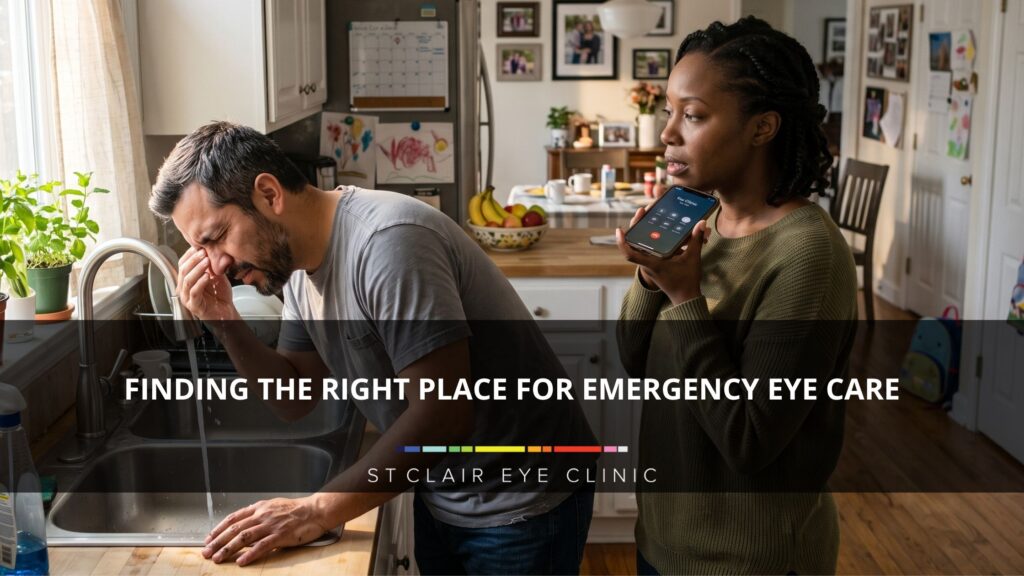
If you have an eye emergency, stay calm. Do not touch your eyes or try to remove any foreign objects. Then, immediately make your way to the nearest hospital or optometrist to seek emergency eye care. It can help to speak to your optometrist about eye emergencies during your next visit—this way, you can know what to do and whether or not they can help. Make sure to note their clinic hours as well! St. Clair Eye Clinic is an emergency referral clinic for University Health Network (UHN), and we provide same-day or next-day treatment. We also arrange quick referrals for secondary and tertiary care as needed.
What to Do if You Have an Eye Emergency
An eye emergency can be frightening at first, but staying calm is essential. Your first step should be to quickly and carefully assess the situation. Follow these steps:
- Assess the severity. If possible, evaluate how serious the situation is. Use a mirror if necessary to determine if there’s any significant damage, an object stuck in your eye, or if the problem only affects one eye.
- Immediately protect your eyes. If you have an object stuck in your eye, do not touch it. Avoid rubbing, scratching, or applying any kind of pressure. Do not try to remove it. Depending on the severity of the damage, you can gently flush your eye with water, but if the object is embedded, do not touch it at all.
- Take action. If you believe the situation is serious enough or your vision is significantly affected, seek immediate medical attention.
- Do not self-diagnose. Avoid taking ointments, medication, or alternative fixes without professional guidance; this can worsen the issue.
- Seek medical attention. Call for help immediately or have somebody take you to an eye care professional or hospital. It’s better to be safe than sorry, and a healthcare or eye care professional can help determine the severity of the problem and how to solve it.
What Counts as Emergency Eye Care?
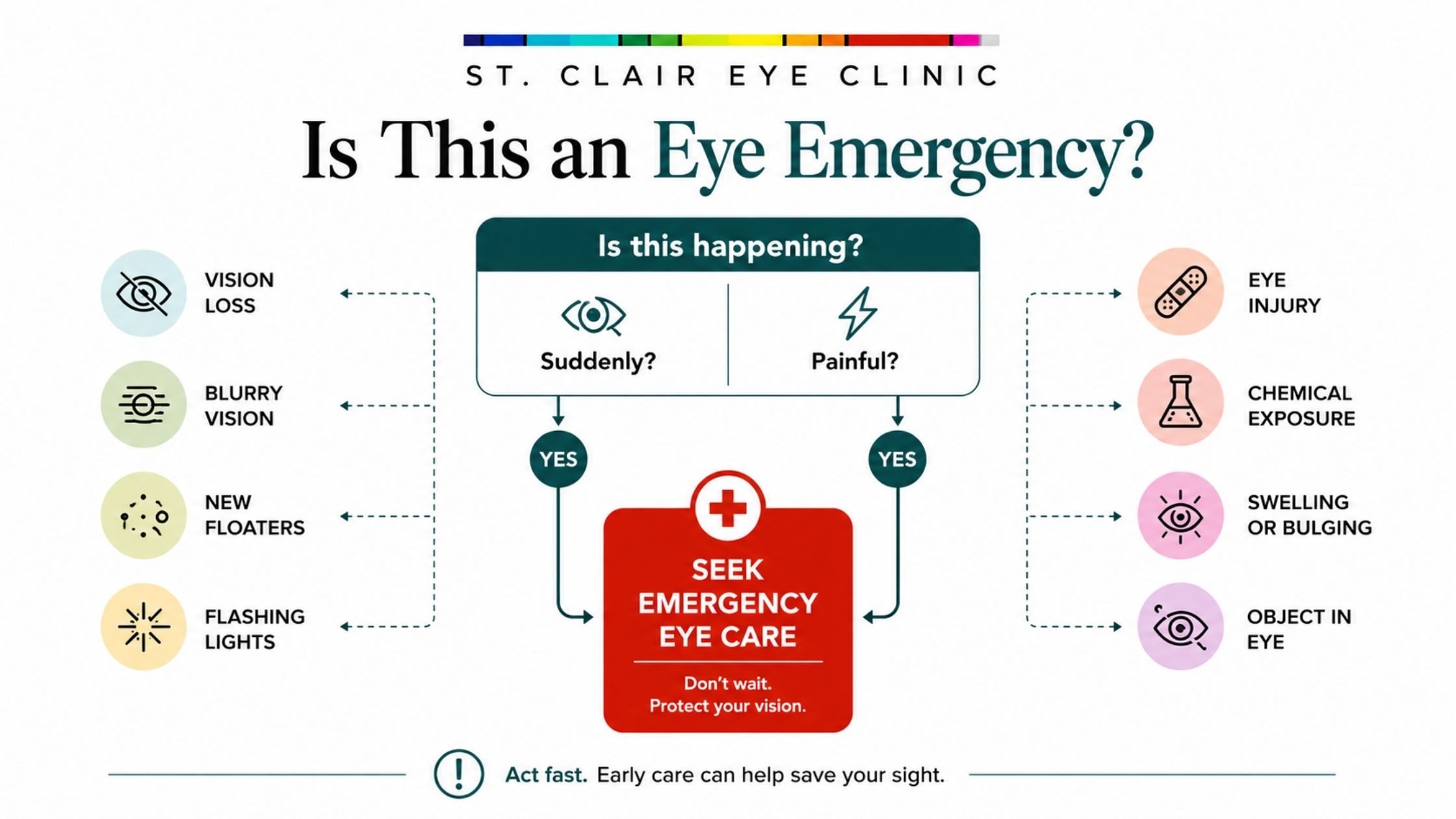
While recognizing an eye emergency isn’t always straightforward, some clear signs can help you to determine if you need emergency eye care or medical intervention. If you notice any of the following, it’s an eye emergency:
- Any shooting or sharp pains in the eye
- A sudden loss of vision
- Any injury, including cuts, scratches, punctures, or burns
- Chemical exposure, whether airborne or splashed
- Sudden blurry vision, especially if accompanied by redness or pain
- A significant sudden increase in floaters
- Bright flashing lights accompanied by discomfort or pain
- Sudden bulging or swelling in the eye
- A foreign object stuck in the eye
If you recognize any of these signs, take action immediately and seek emergency eye care. This can help reduce the risk of long-term damage to the eye or vision loss.
Can an Optometrist Provide Emergency Eye Care?
Your optometrist is trained to handle a wide range of eye conditions, diseases, and other problems. However, it’s important to note that their experience in providing emergency eye care can sometimes be limited. This can vary depending on the practice. While optometrists are often trained to handle plenty of different problems, there is no guarantee that we can solve your problem. However, we can refer you to an ophthalmologist or a hospital if we believe the problem is severe enough.
We can also help with conditions like:
- Pink eye
- Mild-to-moderate irritation
- Foreign object removal
- Infections
An optometrist can help determine whether or not you’re at risk of long-term vision damage. It can help to speak with your optometrist before an emergency occurs. Understanding whether or not your optometrist can help can make handling an emergency much easier. It’s also essential to make a note of their clinic hours; if their clinic is closed, they won’t be able to help.
This way, you’ll know whether your optometrist can provide emergency care or if you should go straight to a hospital. If your optometrist is unable to help, or if a hospital is closer, visit the hospital to get immediate medical attention.
Preparing for Your Emergency Eye Care Visit
Preparation can make assessment more efficient, but never delay urgent care to look for paperwork.
Record What Happened
Be ready to explain when your symptoms began, whether they appeared suddenly or gradually, which eye is affected, and how they have changed. If an injury occurred, describe the object, activity, force, or substance involved and the time of exposure. Mention contact lens use, recent eye surgery, past eye conditions, and any treatment you tried before leaving home. If a product entered your eye, bring its container or, if safe, take a clear photo of the label.
Gather Essential Information
Bring your health card, a list of medications and supplements, medication allergies, and the names of any prescription or over-the-counter eye drops you use. Your glasses, contact lens details, and relevant reports from another eye care provider may also help. If possible, ask someone to accompany you. Your vision may already make driving unsafe, and testing with dilating drops can temporarily cause blur and light sensitivity. Pack sunglasses for the trip home.
What to Expect at the Clinic
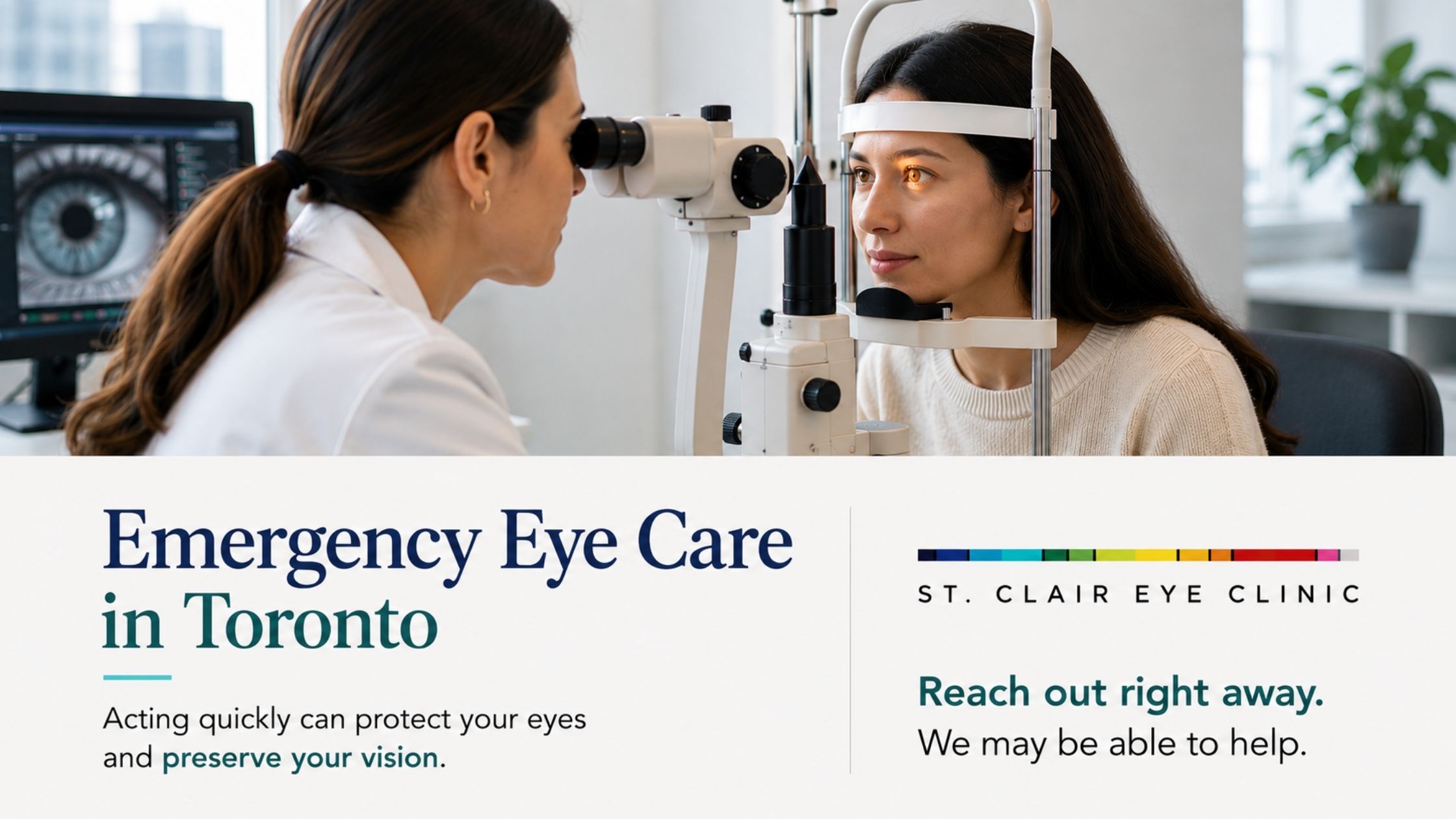
The team will first ask questions and determine how urgently you need to be examined. Testing usually begins with a vision check, followed by an assessment of your pupils, eye movements, and the front of the eye under magnification. Depending on your symptoms, the optometrist may use diagnostic dye to reveal a corneal scratch, measure eye pressure, dilate your pupils to inspect the retina, or order further testing.
After the examination, you should receive an explanation of the findings and next steps. Care might begin during the visit, or you may need prompt referral for imaging, specialist assessment, or hospital treatment. Before leaving, make sure you understand how to use prescribed medication, which changes need urgent reassessment, and how soon follow-up should occur.
Emergency Eye Care in Toronto
Acting quickly during an eye emergency is one of the easiest ways to preserve your eyes and protect your vision. Our team at St. Clair Eye Clinic in Toronto is here to help. If you’re experiencing an eye emergency, reach out to us right away; we may be able to help.
Frequently Asked Questions About Eye Emergencies
What symptoms are considered an eye emergency?
Possible eye emergencies include sudden vision loss, intense or sharp pain, chemical exposure, cuts or punctures, an embedded object, sudden swelling, and blurry vision accompanied by redness or pain. A sudden increase in floaters or flashes of light can also require urgent assessment. When you are uncertain, contact an eye care professional promptly.
Where should I go for emergency eye care in Toronto?
An optometrist offering emergency appointments may be able to assess many urgent eye problems and arrange a referral when necessary. Severe trauma, major vision loss, chemical injuries, or symptoms occurring when an appropriate clinic is unavailable may require hospital care. Choose the option that can provide suitable treatment without unnecessary delay.
Can an optometrist treat an eye emergency?
Yes, optometrists can assess and manage many eye emergencies, including certain infections, irritation, and superficial foreign objects. They can examine the eye, determine whether vision is at risk, begin appropriate care, and refer you to an ophthalmologist or hospital when advanced treatment is needed. Available emergency services vary by practice.
What should I do if an object is stuck in my eye?
Do not rub the eye, apply pressure, or attempt to remove an object that appears embedded. These actions could cause additional damage. Protect the eye from further contact and seek professional assessment promptly. An eye care professional can determine the object’s location and choose the safest method of treatment or removal.
What should I bring to an emergency eye care appointment?
Bring your health card, medication and supplement list, known allergies, glasses, contact lens information, and the names of any eye drops you use. Be prepared to describe when the problem began and how it developed. For a product exposure, bring the container or a clear photograph of its label when safely possible.
What happens during an emergency eye care visit?
The visit usually begins with questions about your symptoms, medical history, and any injury or exposure. The optometrist may check your vision, pupils, eye movements, eye pressure, and eye structures under magnification. Diagnostic dye, pupil dilation, imaging, immediate treatment, or a referral may be recommended based on the findings.